This “Scenic Rides & Drives” series aim to bring you the lesser known scenic routes in the Western Cape and Garden Route. Routes somewhat off the tourist track. And while Bainskloof pass certainly is not lesser known, its close proximity to the Slanghoek valley ride made it a natural extension to this ride.
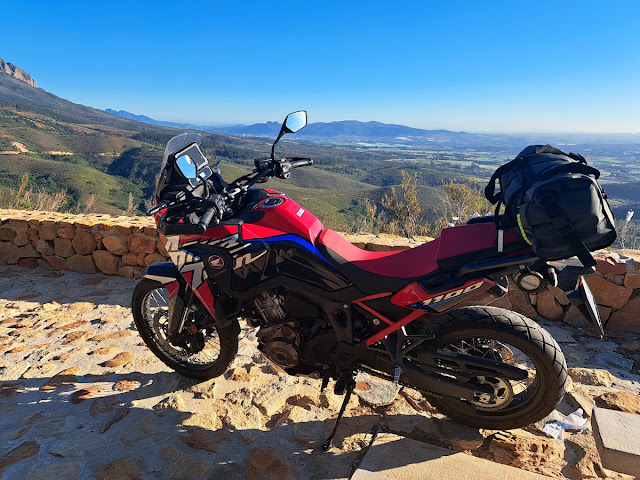
Our wheels for this ride was the 2023 Honda CRF1100 Africa Twin DCT, a brilliant adventure bike perfect for touring any scenic route, regardless of what the road surfaces may be like.
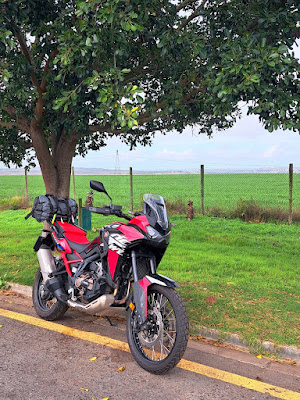
A mere 90km from Cape Town, Slanghoek Valley (Slanghoek directly translates to “snake corner”) is not exactly remote, it is situated just off the N1, South Africa’s biggest main road. But because it’s a secondary road running through a valley not really linking anything, you probably wont be driving or riding through this valley unless you specifically intended to. The route is a gently meandering tar road along the valley between the impressive Slanghoek Mountains and the smaller Badsberg mountain.
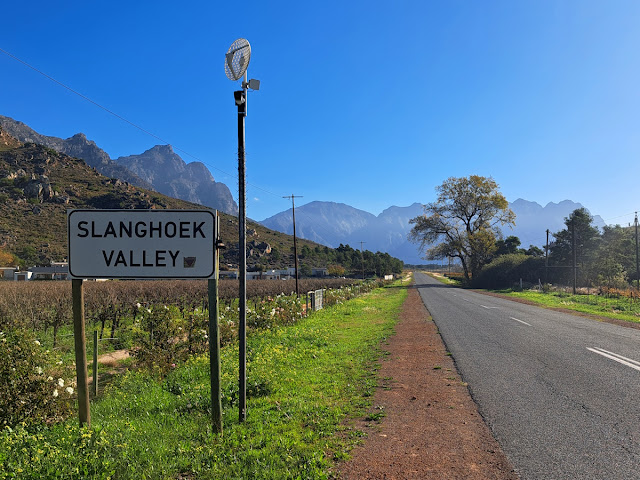
The ride or drive through the valley is a visual feast. A symphony of mountains, legends & vines.
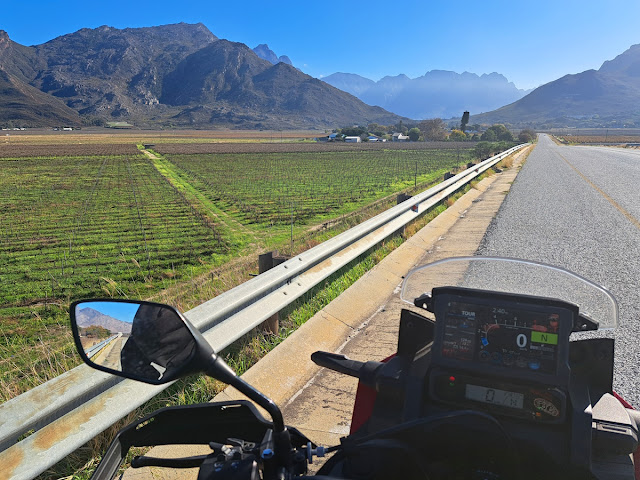
The valley’s geographic position, fertile, varied soils and micro-climate is perfectly suited for growing several different grapes. The Western Cape, which is responsible for over 90% of South Africa’s wine, is home to a number of different wine regions, districts and small wards. The Slanghoek wine region is one of these wards, located in the Breede River Valley.
Established in 1951, Slanghoek Cellar is the only winery in the ward and makes a wide selection of red, white, sweet, fortified and sparkling wines. As a result, the winery has received several prestigious awards, highlighting this powerful ward.
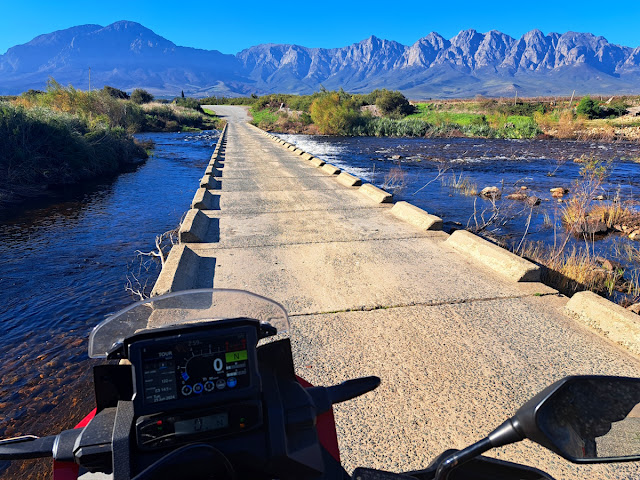
The hidden gem of the beautiful Slanghoek valley – and a river runs through it.
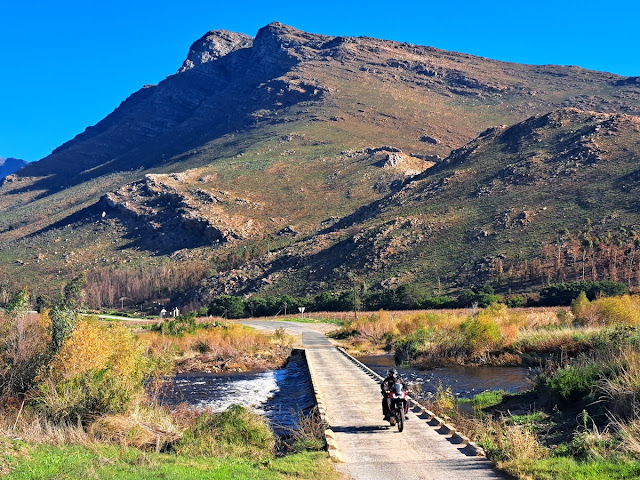
If you have to cross the mountain to get to Cape Town you are spoilt for choice when it comes to passes across the mountain. We recently rode Du Toitskloof Pass, so today I decided to tackle Bainskloof Pass as it’s a natural continuation of the Slanghoek Valley ride.
Built circa 1849 by the famous Andrew Geddes Bain, this pass was no easy feat to build, working with convicts and raw, rough materials and methods. But as usual Bain did a marvellous job of the pass which, having stood the test of time, is now a national monument.
It was a much loved route by the wagoneers who appreciated the gentle gradients that the oxwagons could manage. It remained the main road to the north for almost a hundred years, before the Du Toits Kloof Pass was constructed from 1940 till 1946.
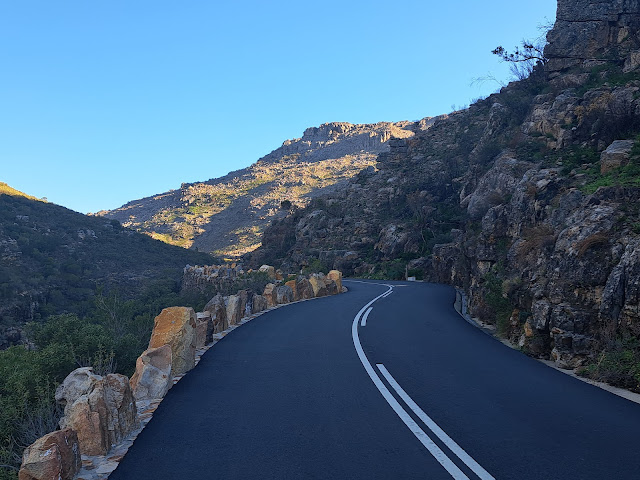
The northern section of the pass roughly follows the course of the Witte River. There are many points of interest along the pass including the two toll points (Eerste & Tweede Tol), Dacre’s Pulpit, Bell Rocks, Pilkington bridge, Borcherd’s bridge, Gawie se Water, Bain’s Ruins and Bain’s Tunnel. The road was resurfaced recently and is in excellent condition, but it is a narrow route and there are not many safe places to stop, otherwise there would be a hundred photos in this report. It’s just that spectacular!
Dacres Pulpit is a precariously balanced overhanging rock. There is a height restriction, which keeps heavy trucks and busses off the pass. I do have a photo of myself riding under Dacre’s Pulpit.
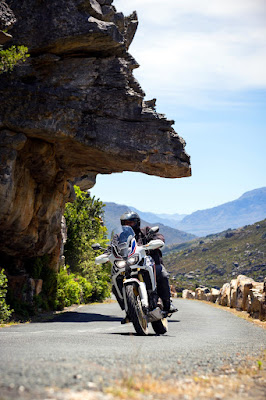
This photo was taken in 2016 during the world launch of the then new CRF1000 Africa Twin. I was riding an Adventure Sport at the time. It is one of my favourite photos.
I also stopped to photograph Borcherd’s Bridge. The only way to see and photograph the stonework under the bridge is to access the campsite and take the short walk under the bridge, but unfortunately the campsite were closed by the time we got there.
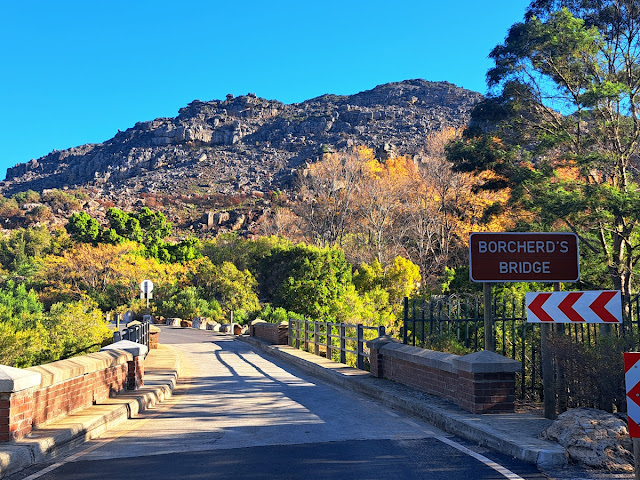
The corners along the pass are very tight and dangerous, so even though you are gawking at the scenery you need to keep your wits about you. There are 101 bends, curves and sharp corners with drop-offs that are near vertical and the only protection is a row of large spaced rocks.
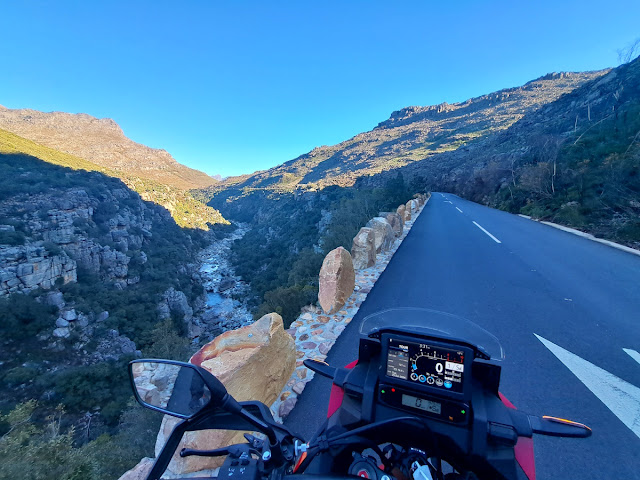
Reaching the Western side of the pass you are treated to spectacular views.
In today’s rat race, people sit in traffic in a futile attempt to get from A to B as quickly as possible. Stress, anger and irritation has become the norm in these commutes. And all the while we miss the beautiful area we are driving through. Find the hidden gems just off the main routes, take or make some extra time and drive the scenic route, drinking in the natural beauty that is around. It is like a one or two hour holiday!
Article: Johann van Tonder