In the sprawling history of the Garden Route, one name echoes louder than any other. Bain. Thomas Bain, “The Man with the Theodolite Eye,” is rightly celebrated as the genius who carved roads into mountains that many deemed impassable. His name is on plaques, in history books, and on the lips of every tour guide from Mossel Bay to Storms River.
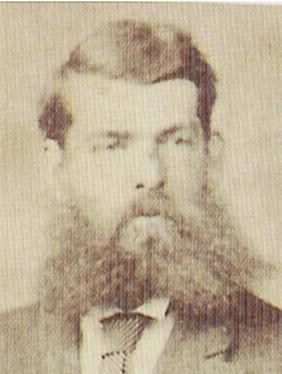
Yet, history rarely happens in a vacuum. Beside the charismatic Bain stood another figure, a man whose contributions to the way we move through this landscape are just as profound, if far quieter. His name was Adam de Smidt. He was Bain’s brother-in-law, his professional rival, and the unsung engineer who built the foundations of the Garden Route we know today.
For the resident driving from George to Wilderness, or the tourist heading inland toward the magic of the Klein Karoo, you are almost certainly riding on the legacy of Adam de Smidt.
The Gentleman Engineer
Unlike the self-taught, rugged Bains, Adam de Smidt was a man of precise training. He was one of the first qualified geometric engineers in the Cape Colony. Contemporary accounts describe him not as an adventurer, but as a gentleman possessed of an “unflinching and fearless determination.” He did not seek out the most dramatic cliffs merely for the challenge. He sought the most logical, efficient path for commerce and travel.
It was perhaps inevitable that these two distinct personalities, the artistic visionary Bain and the pragmatic De Smidt, would clash.
The War for the Seven Passes
Their relationship fractured during the construction of one of the Garden Route’s most beloved treasures: the Old Seven Passes Road between George and Knysna.
In the 1860s, the government tasked the two brothers-in-law with connecting the timber forests of Knysna to the commercial centre of George. They split the massive undertaking down the middle. Bain took the challenging eastern sector from Knysna, home to the formidable Homtini Gorge. De Smidt took the western sector leading out of George.
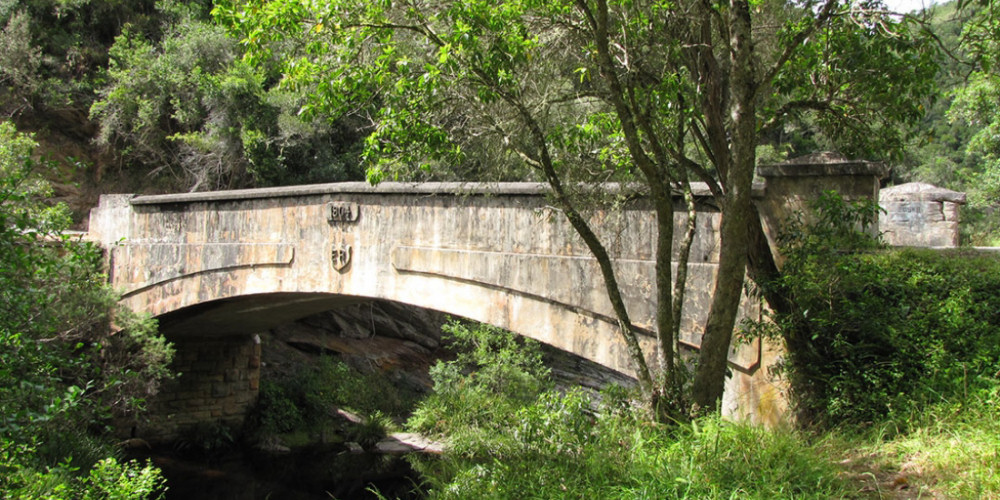
De Smidt worked with remarkable speed. He carved out the Kaaimansgat Pass, the Silwer River Pass, and the Touw River Pass. His routes were elegant, sensible, and finished ahead of schedule. Meanwhile, Bain was bogged down in the dramatic engineering puzzle of the Homtini.
The professional disagreements over routing became personal. De Smidt, frustrated by what he saw as Bain’s unnecessary flair for the dramatic and slow progress, eventually purchased a farm near his construction camp at the Touw River. He named it Woodifield. He retreated there to escape the tension, and history tells us the two men never spoke again.
When you drive that winding, forested road today, realize that you are traversing a family feud preserved in gravel and stone.
Opening the Doors to the Karoo
De Smidt’s influence did not stop at the coastal plateau. For those of us living along the coast, the Swartberg mountains are the gateway to a different world. De Smidt held the keys.
In 1858, when the decision was made to blast a route through the immense cleft of Meiringspoort, it was Adam de Smidt who was the “boots on the ground” supervisor. He managed a workforce of nearly a hundred laborers, turning a rough track used by wool farmers into a viable economic artery that connected the port of Mossel Bay with the interior.
Two years later, after a devastating flood destroyed initial attempts to open Seweweekspoort nearby, De Smidt was called in to salvage the project. He spent two years taming that UNESCO World Heritage site. He took a journey that once required a brutal, six-day struggle through the riverbed and turned it into a three-hour scenic drive.
The Final Torch
Perhaps the most telling measure of De Smidt’s character happened far from the Garden Route. In 1864, the patriarch of South African road building, Andrew Geddes Bain (Thomas’s father), died before he could finish his final masterpiece, the massive Katberg Pass in the Eastern Cape.
It was Adam de Smidt who stepped in. He spent two years faithfully executing the old master’s vision, ensuring the legacy was completed without taking the glory for himself.
Today, Thomas Bain gets the statues and the accolades. But Adam de Smidt got the job done. Next time you navigate the smooth, logical curves leading out of George, take a moment to acknowledge the silent architect who knew that the ultimate journey was not just about the scenery, but about the quality of the road beneath your wheels.
Article: Johann van Tonder
Photo credit: Adam de Smidt www.theheritageportal.co.za/