This is the Story of the Knysna Boer-War Fort. A largely unknown historic site in the bustling tourist town of Knysna.
It was built during the Second Anglo-Boer War, a conflict fought between the British Empire and the two independent Boer republics, the South African Republic (Transvaal) and the Orange Free State. Even though this war was fought far inland, a daring and flamboyant Commandant Gideon Scheepers, a brilliant young Boer guerilla leader who commanded legendary tactical raids, ventured deep into the Cape Colony disrupting British supply lines and rallying local sympathizers.
It was the earlier attacks at Willowmore, Uniondale and Avontuur that led to the building of a Fort in Knysna:
“News of the attacks by Boer commandos on Willowmore and Avontuur in January 1901 resulted in the declaration of Martial Law in Knysna and the immediate formation of a Town Guard about 70 strong, which set pickets at the entrances to the town and at the goal every night.”
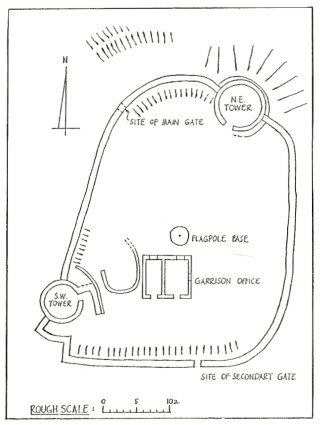
Commanded initially by Major William Anstruther Thomson, the Royal Horse Guards ordered the construction of a stone fort on Verdompskop (the hill west of the present-day Knysna hospital) built from locally quarried stone. Situated on the rounded top of the hill, Knysna Fort comprised two loopholed circular towers – towers with vertical slits in the wall – at the north-east and south-west corners, connected by a drystone (mortarless) perimeter wall enclosing an irregular area about 35 x 32 m. A circular stone base in the centre of the fort carried a flagpole and two small guns (carronades), dating from c1806. To the south of this was a rectangular two-roomed garrison office. Unlike the connecting wall, the two towers and the office were constructed of mortared masonry and finished at the top with crenellated parapets or battlements.
The designer of the fort appears to have been an enthusiast for medieval military architecture, because, in both plan and general design, it closely resembles a small English castle.
Plan of the Fort (Sketch by Richard Tomlinson)
These are old photos of the Knysna Fort in its heyday, with the Heads beyond and the interior of the Knysna Fort as it was, showing the garrison office, the stone base with flagpole and two cannonades and the south-west tower behind:
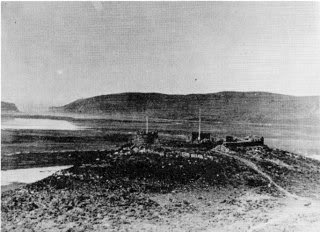
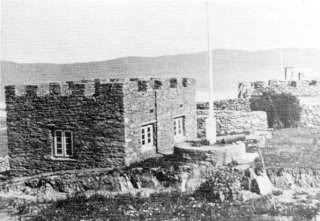
(Photos: Millwood House Museum Collection, Knysna)
The Town Guard was mobilized in less than half an hour on 27 February after a body of men had been reported to be approaching the Knysna bridge. Fortunately, these materialised as a party of mule drivers from Pacaltsdorp near George. Furthermore, the books and assets of the Standard Bank were sent by sea to Mossel Bay for safekeeping and several suspicious characters, including the minister of the Dutch Reformed Church and others with Dutch names, were arrested on various pretexts.
This is what the fort looks like today:
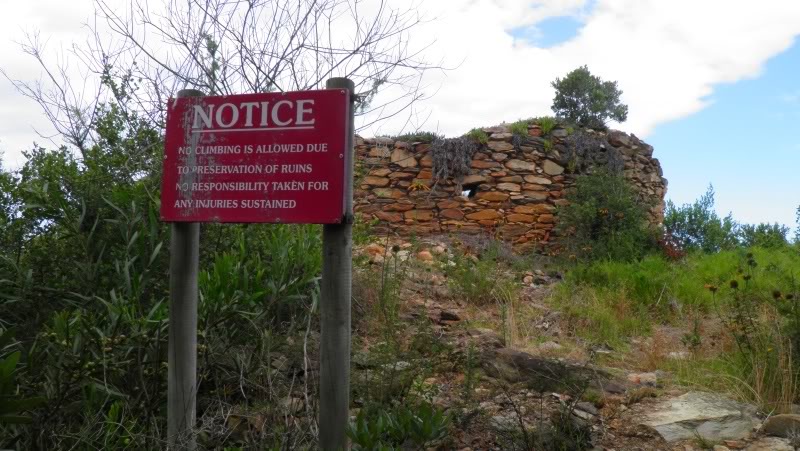
You still enter where the main gate used to be right next to the N.E Tower:
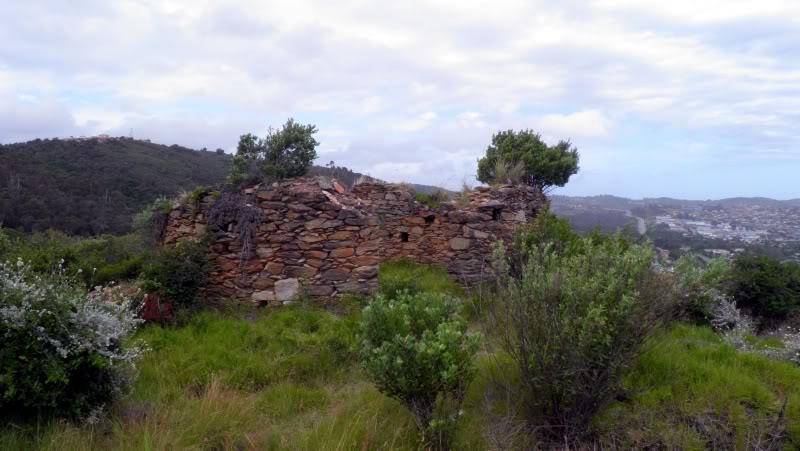
The N.E. Tower as seen from the Garrison Office:
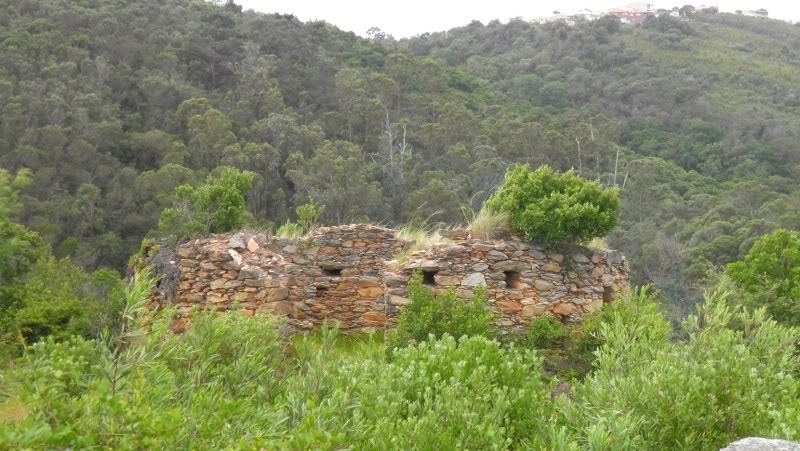
The ruins of the Garrison Office:
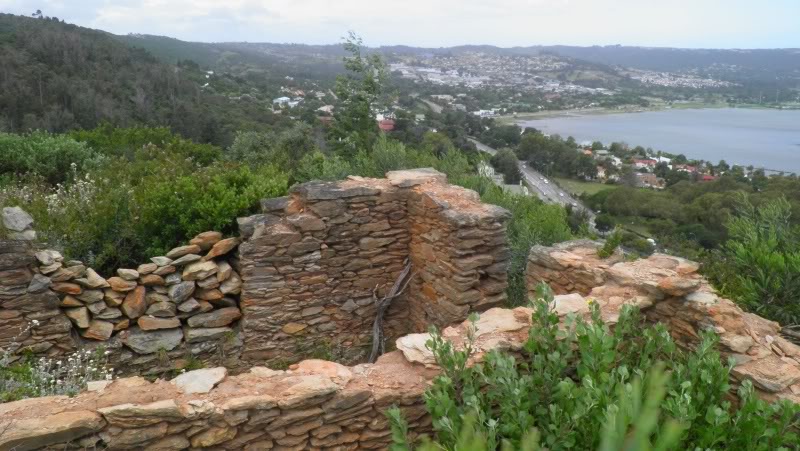
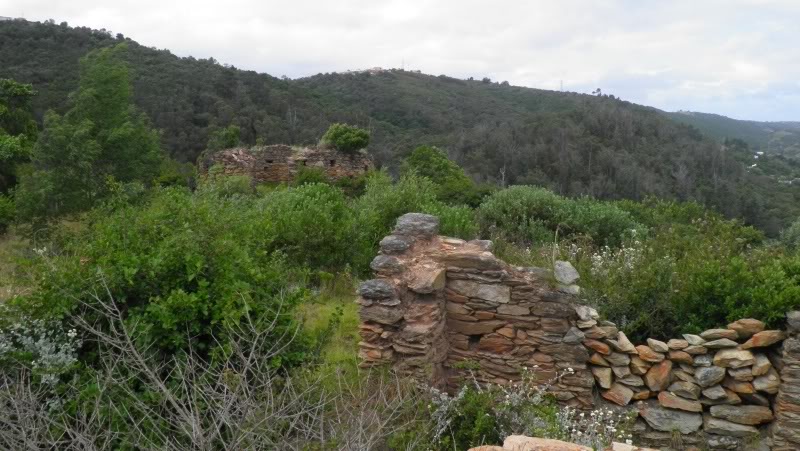
Looking towards he S.W. Tower:
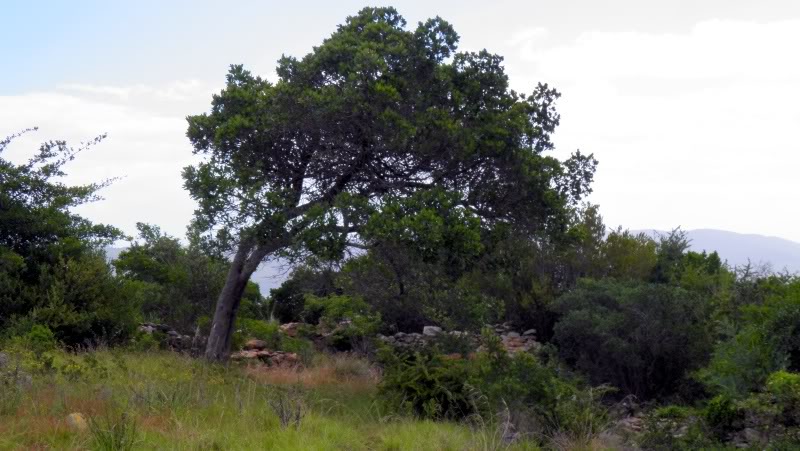
Close up:
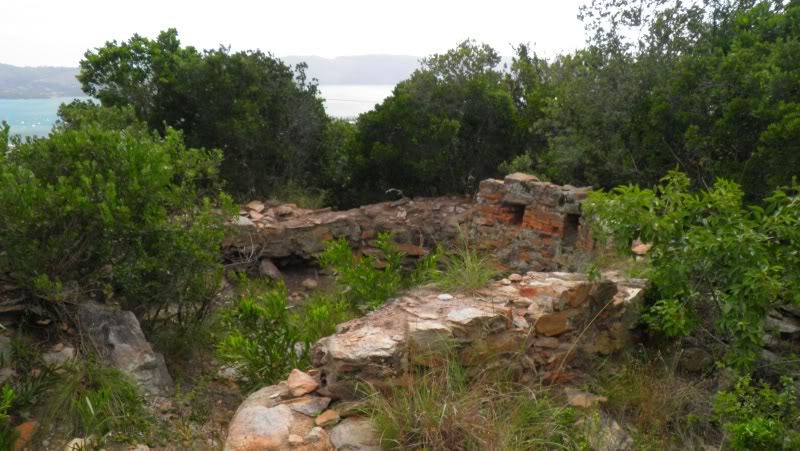
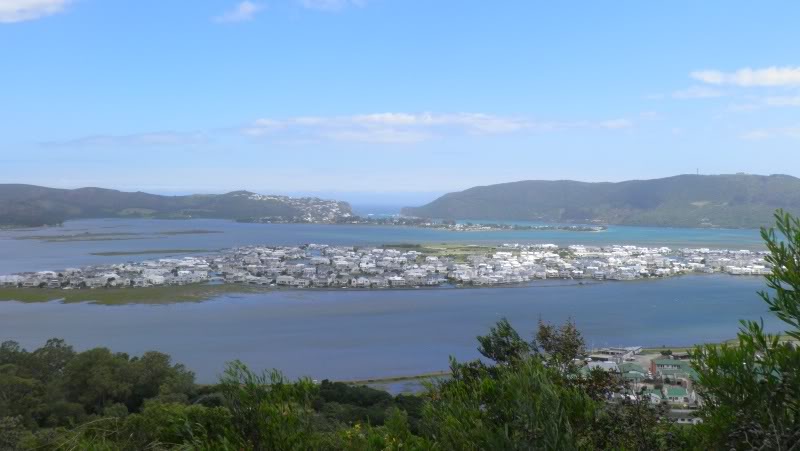
View of the Knysna Heads as seen from the fort today:
The source of information on this fort is Richard Tomlinson’s website here.
Knysna Fort never saw military action and was referred to by locals as “Thomsons Folly”. It’s probably the most southerly fort dating to the Anglo-Boer War in South Africa.
Article: Johann van Tonder