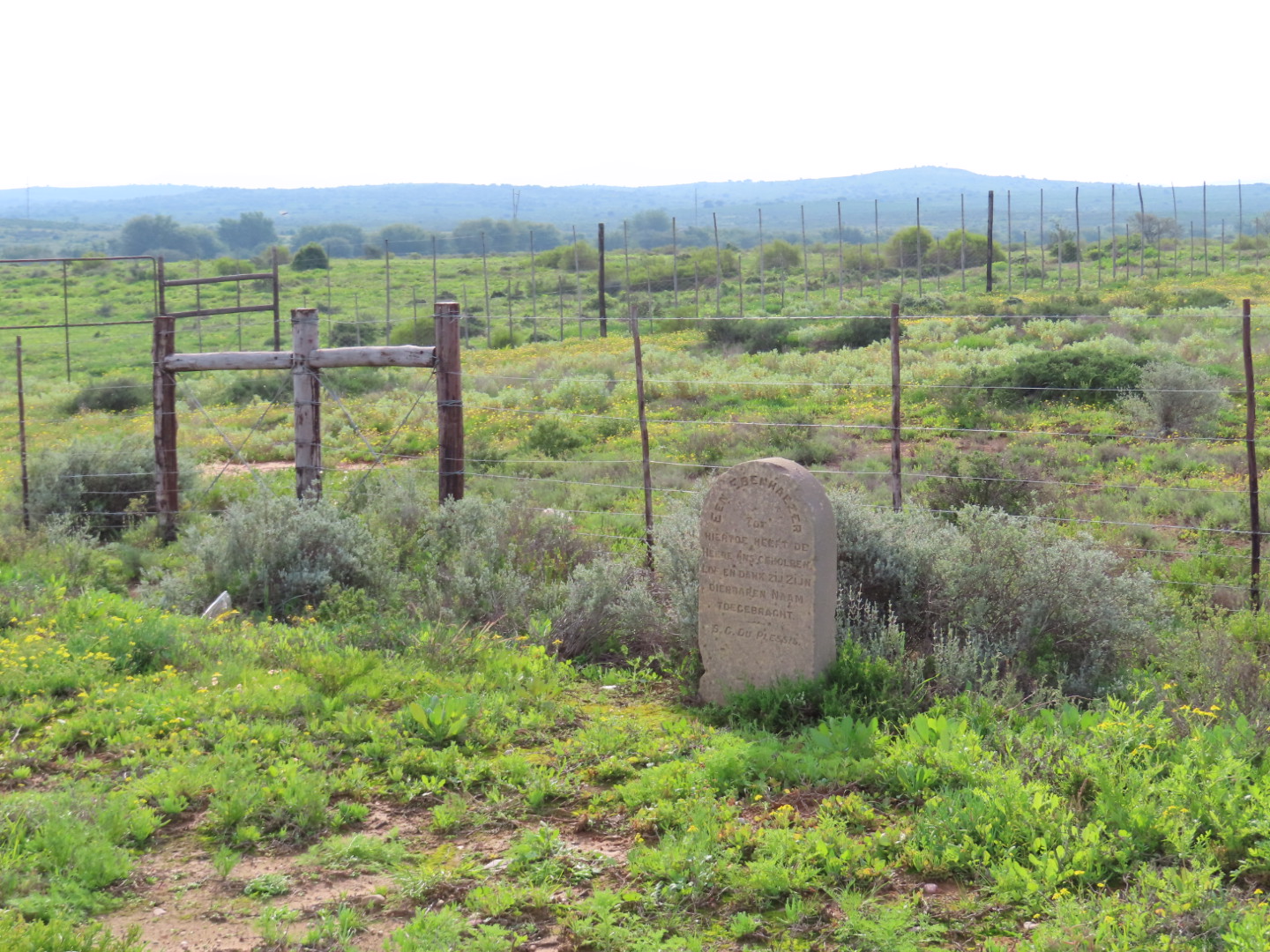
If you have ever driven the N12 between Oudtshoorn and De Rust, chances are you have flown right past one of the most remarkable, hidden-in-plain-sight monuments in the entire Klein Karoo.
Just about 7 km outside Oudtshoorn, right as the tarmac sweeps into a sharp bend where the highway crosses the railway line near Hazenjacht, sits a solitary, weathered stone marker. It looks a bit like a lonely grave, but it isn’t.
It is a monument to a broken pocket watch, a terrifying split-second choice, and a miraculous escape from a roaring locomotive.
This is the story of the Sarel du Plessis Ebenezer stone, and exactly why you need to pull over, step out of your vehicle, and read the inscription for yourself.
The year was 1908. Sarel “Sareltjie” C. du Plessis, a well-known local farmer and church elder, was preparing to take his family into Oudtshoorn for the weekend. In those days, a trip to town from the surrounding farms was a major excursion. Families would pack their horse-drawn carriages (perdekarre) and head to their tuishuise (town houses) in places like Rus Street to attend Nagmaal (Holy Communion) services and stock up on supplies.
Traveling with Sarel that Friday afternoon were his wife, Jacomina, and their brave 13-year-old daughter, Maynie.
Unbeknownst to Sarel, his trusted pocket watch was running exactly one hour fast.
In the early 1900s, train schedules through the Karoo were regular but sparse. Farmers knew the timetables by heart and relied completely on their timepieces to gauge when it was safe to cross the railway tracks. Looking at his watch, Sarel confidently remarked to Jacomina that the afternoon train hadn’t even reached the Hazenjacht siding yet. They had all the time in the world, he thought, to cross the Stolsvlakte intersection. He was dead wrong. The train was barreling right toward the crossing on a direct collision course with his family.
As the carriage neared the tracks, a perfect storm of environmental factors blinded the family to the oncoming danger. The wind was blowing hard from the opposite direction, carrying the sound of the steam engine away from them. Worse, the rough, unpaved dirt roads created a massive racket. The carriage wheels lacked rubber tires, and the clattering of iron and wood completely drowned out the rumble of the approaching locomotive.
At the absolute last second, the horses sensed the danger. Instead of crossing the tracks, the terrified animals veered violently to the left. It was a move that saved their lives, but the collision was already unavoidable. The train slammed into the back of the wooden carriage with a sickening crunch, instantly ripping off the rear rack where the animal feed was stored. The violent impact lifted the heavy carriage, balancing it precariously on just a single wooden wheel. The force of the crash threw Jacomina clear of the vehicle. She hit the ground hard and was knocked unconscious. Sarel was thrown next, tumbling into the dirt, entirely helpless.
With the horses completely panicked and bolting down the track, the carriage was on the verge of flipping over and dragging the family to a catastrophic end. But 13-year-old Maynie, sitting in the back, didn’t panic. As the carriage rocked on one wheel, she scrambled over the seats into the driver’s box, lunged forward, and grabbed the trailing leather reins. Putting every ounce of her weight into it, the young girl managed to rein in the terrified horses and bring the shattered carriage to a halt.
Miraculously, everyone survived. Sarel escaped with nothing but a torn jacket, though the delayed shock was so severe he fainted right on a doorstep when they finally reached town. Jacomina spent a week in bed recovering from her injuries but made a full recovery. In a bizarre twist of Karoo irony, Sarel’s own stable groom happened to be a passenger on that very train and jumped out of the carriages to help his employer’s family.
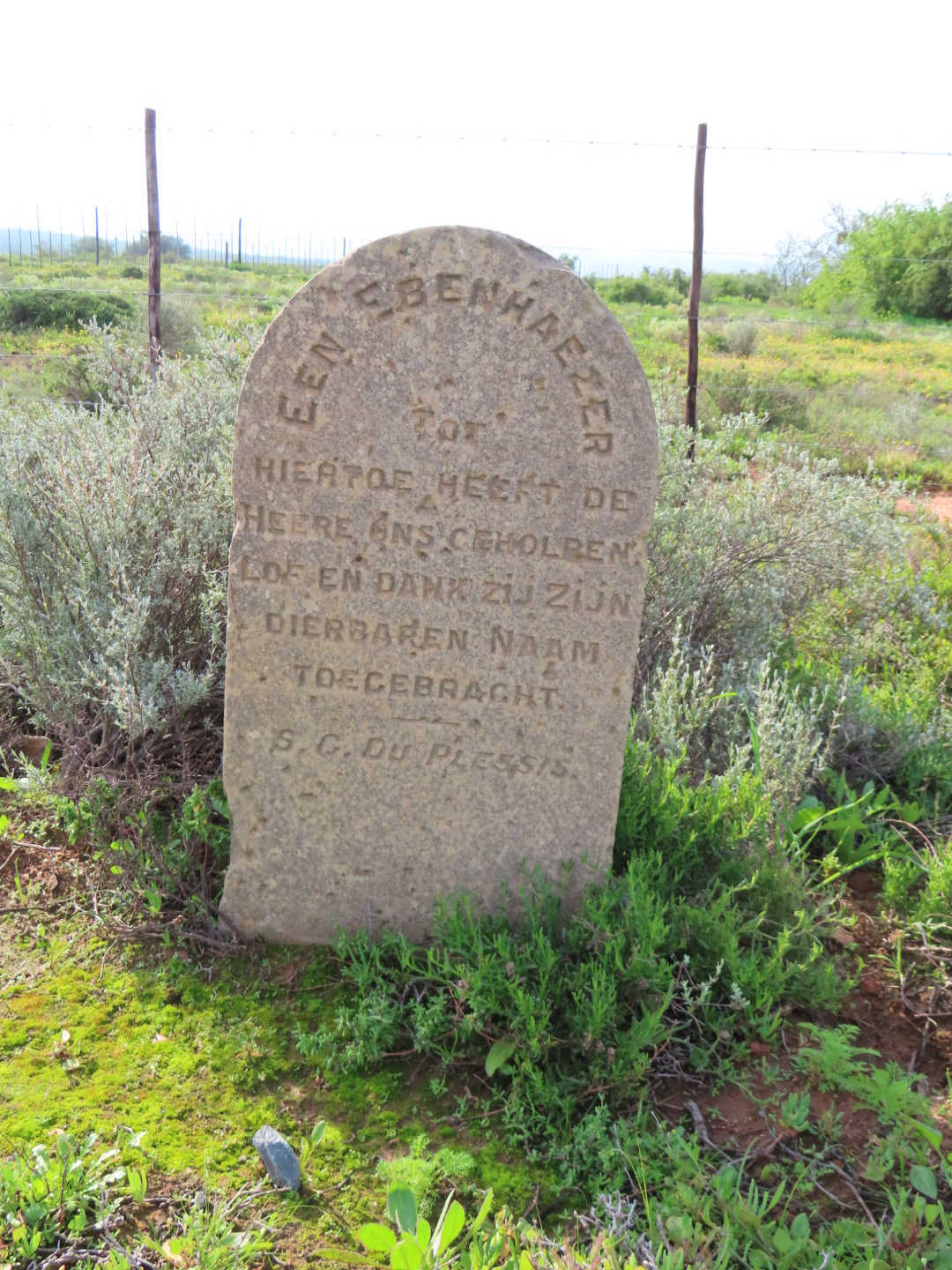
Overwhelmed by how close his family had come to a horrific tragedy, Sarel du Plessis later went back to the exact spot of the near-miss. He carved a stone monument with his own hands and erected it by the roadside to permanently honor what he called his “beloved Heavenly Father’s saving grace.”
He carved it as an Ebenezer: a biblical term meaning “stone of help.” The inscription, still legible today, reads:
EEN EBENHAEZER
Tot hiertoe heeft de Heere ons geholpen. Lof en dank zij Zijn dierbaren Naam toegebracht.
S. C. DU PLESSIS
(An Ebenezer: "Thus far the Lord has helped us. Praise and thanks be given to His precious Name.")
Today, the old Du Plessis farmstead operates as Thabile Lodge, and the infamous pocket watch that caused the entire ordeal is still kept as a treasured family heirloom by his descendants.
The next time you are driving or riding the N12 corridor, don’t just rush through to your destination. Slow down as you approach the railway bridge outside Oudtshoorn. Pull off safely onto the gravel verge, walk up to this handmade stone, and stand exactly where a 13-year-old girl saved her family from the thundering iron horse. It’s a powerful reminder that every bend in the Southern Cape roads holds a story worth stopping for.
Completing the Journey: The Rus Street Tuishuise
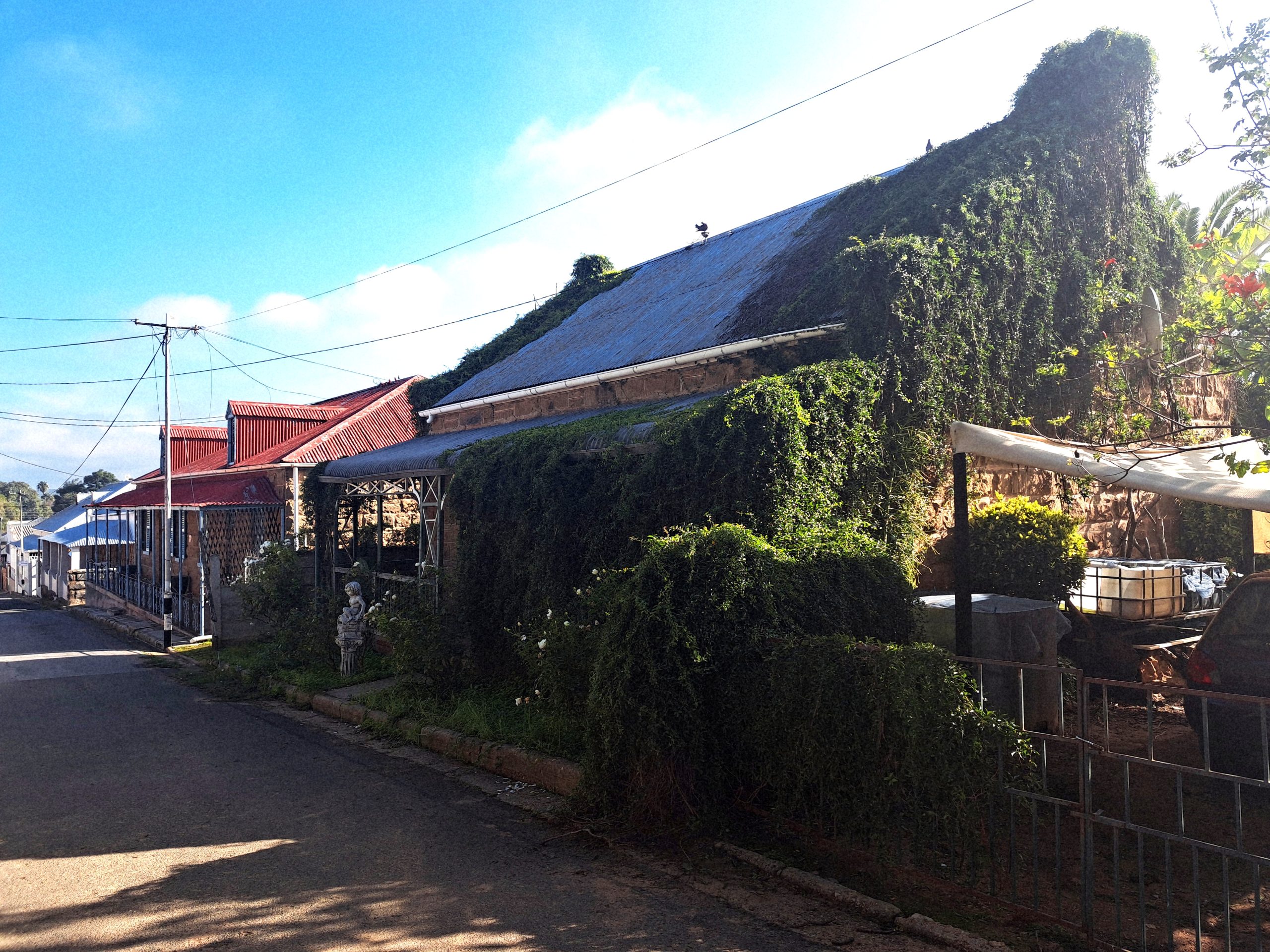
To truly finish the story of Sarel’s miraculous escape, you have to follow his tire tracks all the way into the historic heart of Oudtshoorn. Head into town and take a slow drive down Rus Street, where the family’s original tuishuis (town house, although not certain which house was his) still stands among a strictly protected, beautifully preserved row of late-Victorian and Edwardian homes.
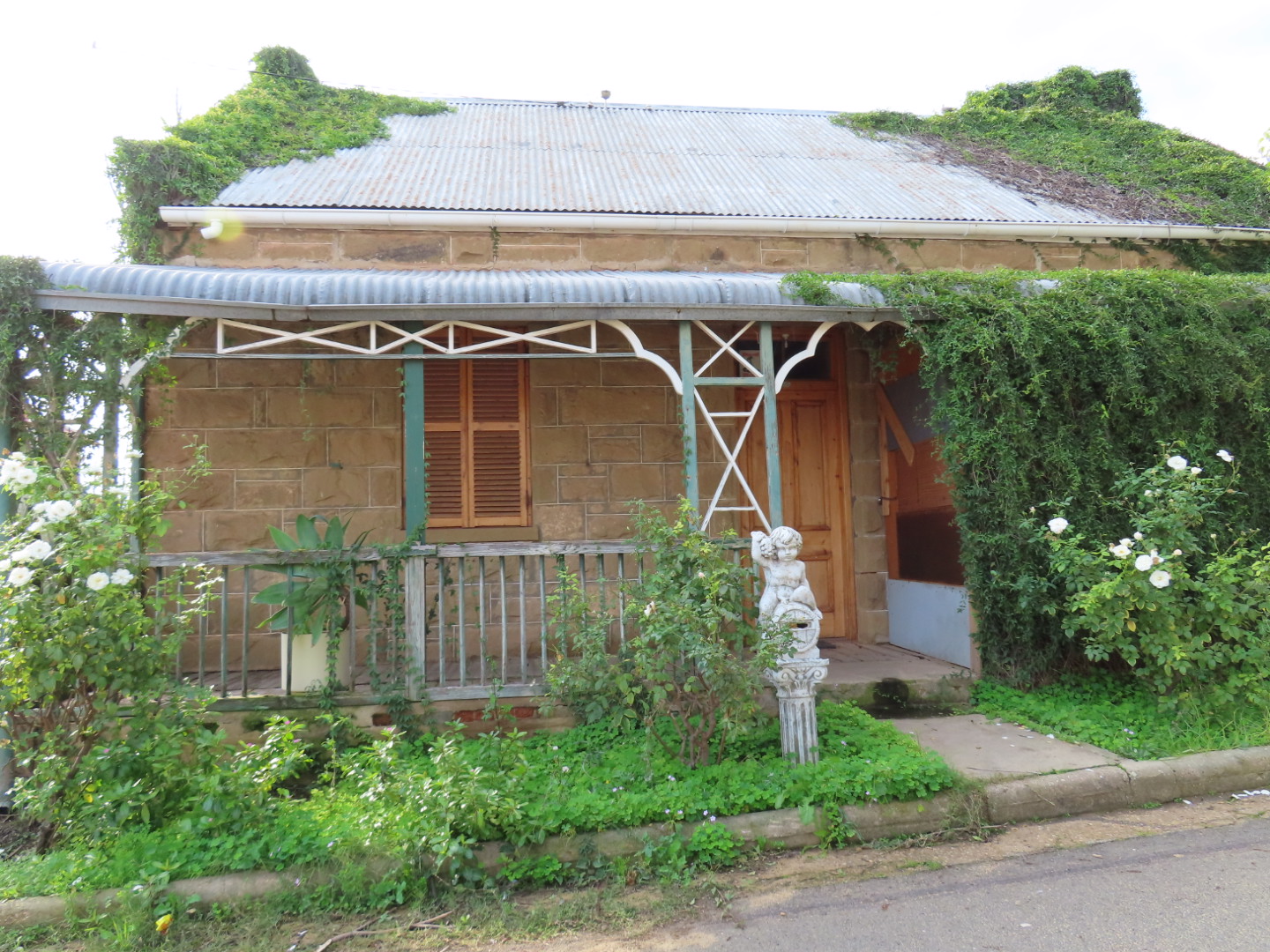
Unlike the ostentatious “Ostrich Palaces” built by the wealthy feather barons on Baron van Reede Street, Rus Street was the domain of the working Karoo farmer. These modest, elegant cottages with their classic corrugated iron roofs and deep front verandas were used exclusively as weekend bases when families traveled long distances for Nagmaal (Holy Communion) services or town business. Walking or riding down this quiet street today is like stepping straight into 1908: and it gives the entire narrative a fantastic final layer when you realize that one of these very doorsteps is where Sarel du Plessis finally collapsed from delayed shock once his family was safe.
The Crown Jewel of Sandstone: The NG Moederkerk
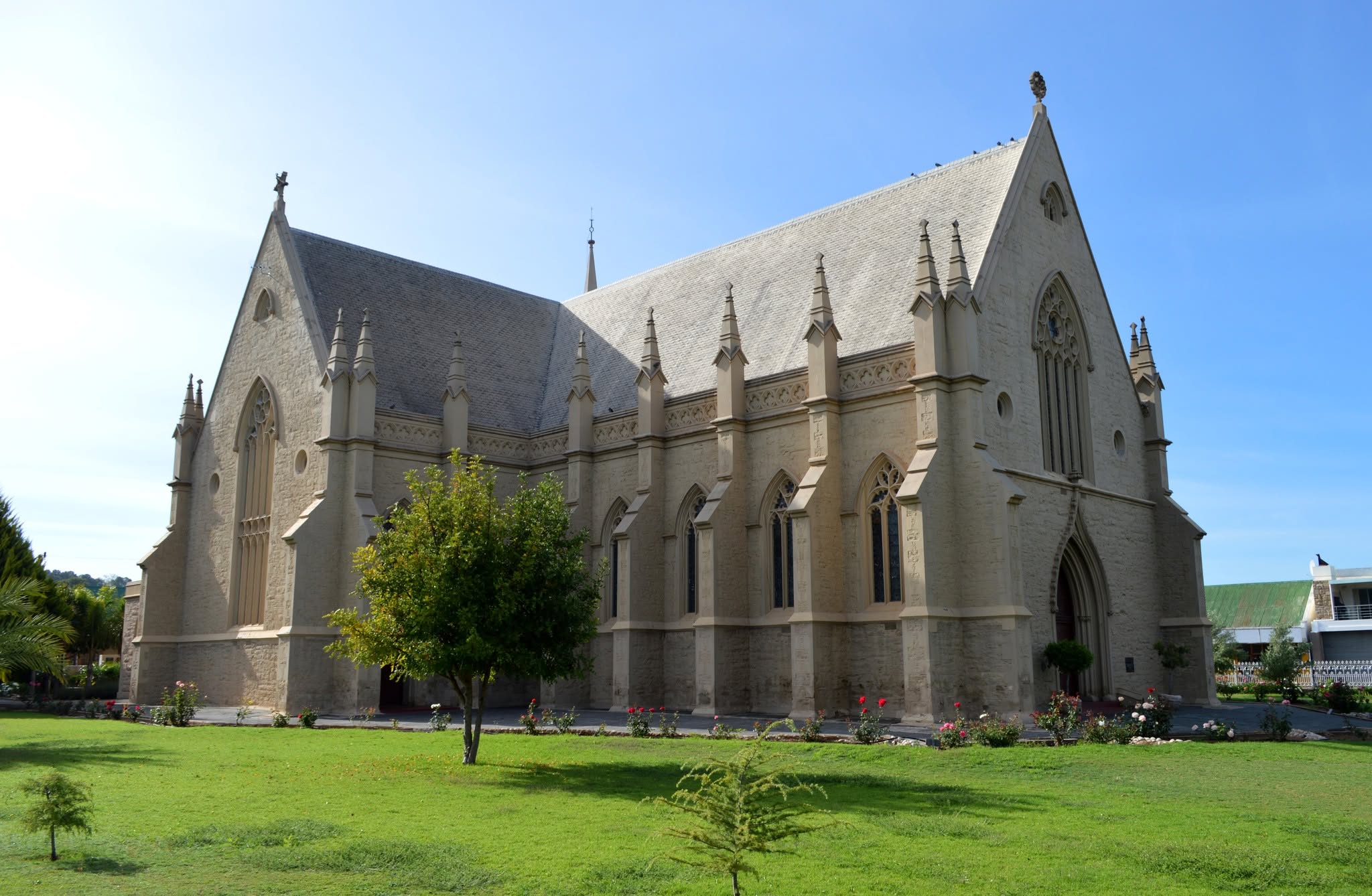
Just a short walk or drive from the quiet simplicity of the Rus Street tuishuise, the landscape is suddenly dominated by a staggering masterpiece of European design dropped right into the Klein Karoo: the Dutch Reformed Mother Church (NG Moederkerk).
Inaugurated in 1879 after a grueling 22 years of stop-and-start construction plagued by intense droughts and financial squabbles, this massive structure is widely considered the finest work of the legendary architect Carl Otto Hager.
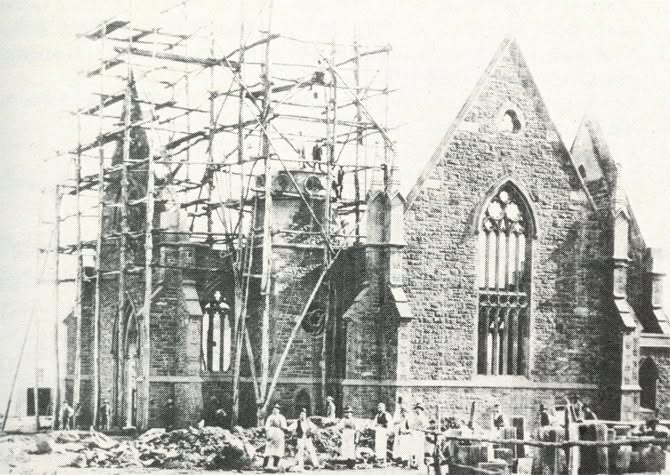
Built entirely from beautifully dressed local grey sandstone, the building is a glorious, textbook example of Neo-Gothic Revival architecture. Every classic hallmark is here: dramatic soaring spires, deep-set pointed arch windows, massive structural buttresses, and delicate stone tracery.
Because the local sandstone was of such exceptionally high quality, imported master stonemasons from England were able to carve intricate, delicate flower designs and geometric trefoils straight into the facade.
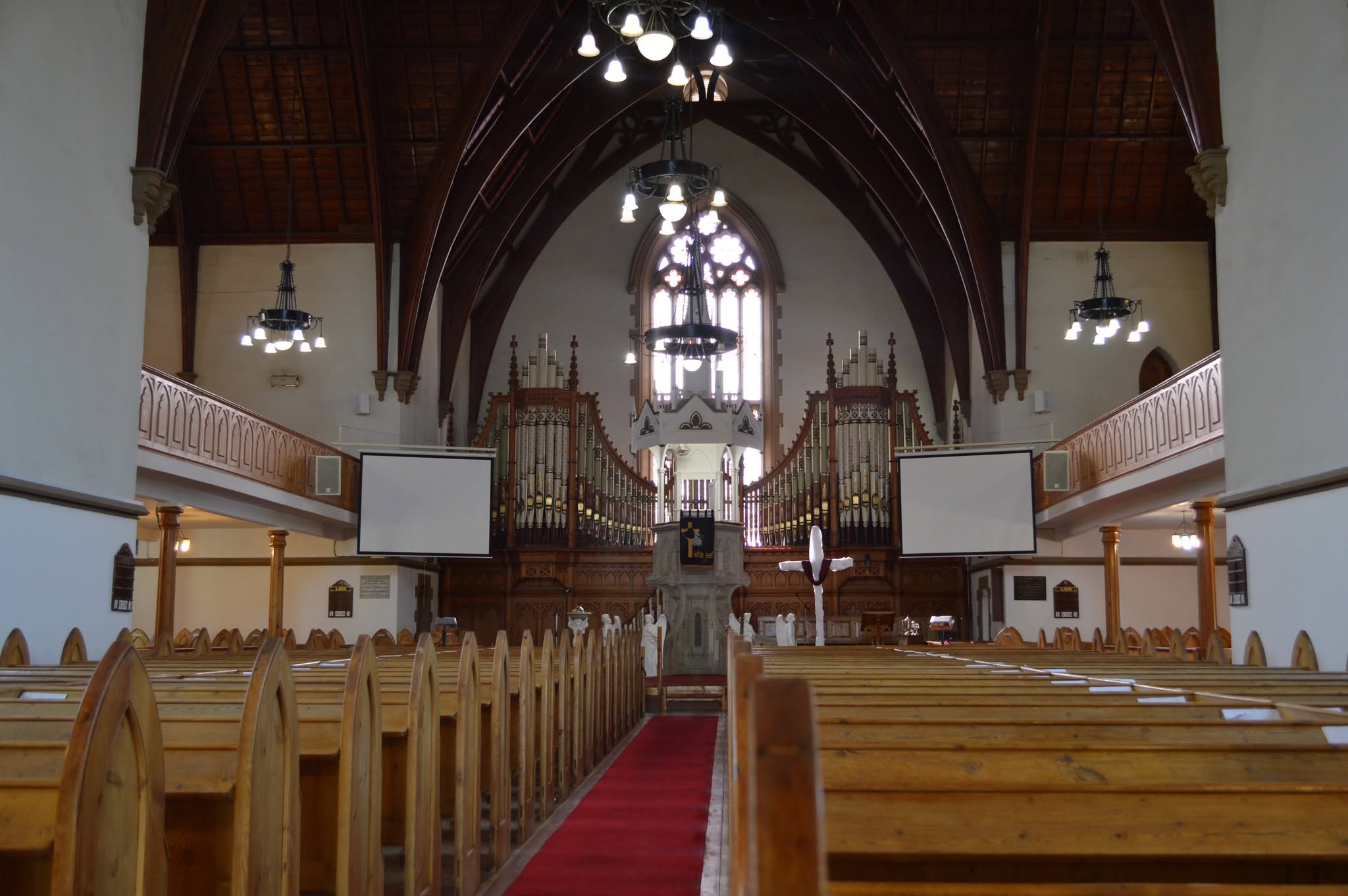
Most surprising of all for a traditional, conservative Karoo church are the prominent, highly stylized gargoyles leaping out from the roofline. Functioning both as architectural water spouts to shed rain from the vast stone roof and as classic medieval symbolic guardians, these stone beasts give the Moederkerk an eerie, sweeping cathedral atmosphere that feels more like the rainy heart of Europe than the sun-baked plains of the interior. It is an absolute architectural anchor point that perfectly frames the era Sarel du Plessis lived in.
Article: Johann van Tonder