On the Trail of Gideon Scheepers
A young Boer commander rides into Uniondale, beginning a remarkable campaign through the Southern Cape and Karoo. Follow the roads, forts, graves and memorials that still tell his story.
PART ONE | THE CAMPAIGN
The young commandant who brought the war to the Southern Cape
The Sunday the war came to Uniondale
It was Sunday, 20 January 1901. In the little town of Uniondale, the usual Sunday routine was under way when a party of armed Boer horsemen rode into town.
At their head was a young commandant who had not yet celebrated his 23rd birthday. His name was Gideon Scheepers.
For many people in the Cape Colony, the war had until then seemed something that happened somewhere else. Suddenly, it had arrived on their doorstep.
Scheepers and his men had not come to occupy the town permanently. They had other plans.
The previous day, they had met resistance at Willowmore. The town’s defenders were ready for them, and the commando had continued westwards. Uniondale was a different proposition. Although word of the approaching Boers had reached the town, there was little time to organise a proper defence.
At around eleven, Boer horsemen were spotted on the surrounding hills. By midday, about fifty riders had entered the town.
The telegraph operator managed to send a warning before disappearing with his equipment. For the magistrate, however, it was too late. The Boers demanded the keys to the courthouse and gaol, commandeered useful horses and released prisoners. The magistrate, gaoler and English clergyman found themselves locked up instead.
It was a rather unusual Sunday in Uniondale.
According to the recollections of Dr R. Morrow, who was serving as temporary district surgeon in Uniondale, he found Scheepers at the local hotel, reading letters taken from the post office.
Morrow also met Scheepers’ adjutant, Henry Hugo, who invited him to have a drink. For a British subject in a town freshly occupied by Boer horsemen, it was an awkward invitation.
The doctor found an elegant way out of it. Rather than proposing a toast to the Queen, he expressed the hope that Hugo would never have need of a doctor’s services.
The following morning came news that British reinforcements were approaching. Scheepers’ men saddled up and left Uniondale. They had hardly spent a day there, but their visit had certainly shaken the town awake.
Before long, a town guard was organised and stone forts were built on the surrounding heights. One of those simple defensive positions still overlooks Uniondale. From up there, you can look across the town, the church and the streets through which Scheepers’ riders passed more than a century ago.
It was places like these that persuaded me to get on the motorcycle and follow Scheepers’ trail through the Southern Cape and Karoo. I wanted to see what remained of his campaign: the towns he had entered, the passes his men had ridden, the old buildings and the graves along the way. It turned into more than one ride, and each journey revealed something that made me stop. Sometimes a little stone fort on a hill. Sometimes an ordinary-looking place you would never notice unless you knew the story behind it. And the wonderful thing is that you can still follow these roads today. You simply have to know what to look for.
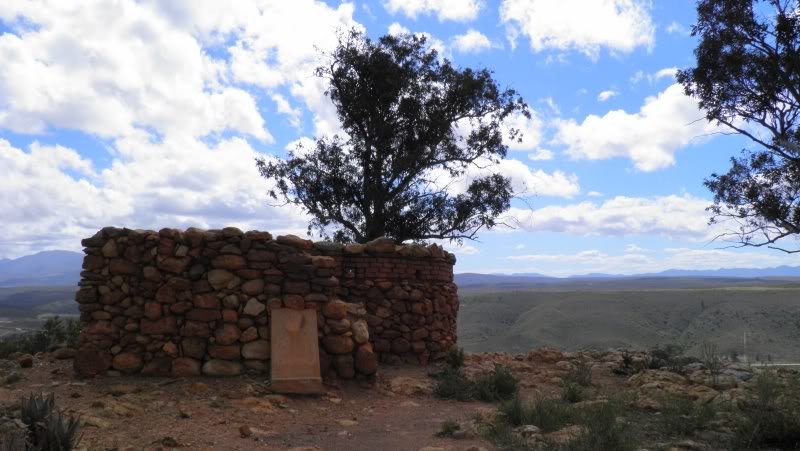
The stone fort above Uniondale, probably built shortly after Scheepers’ visit.
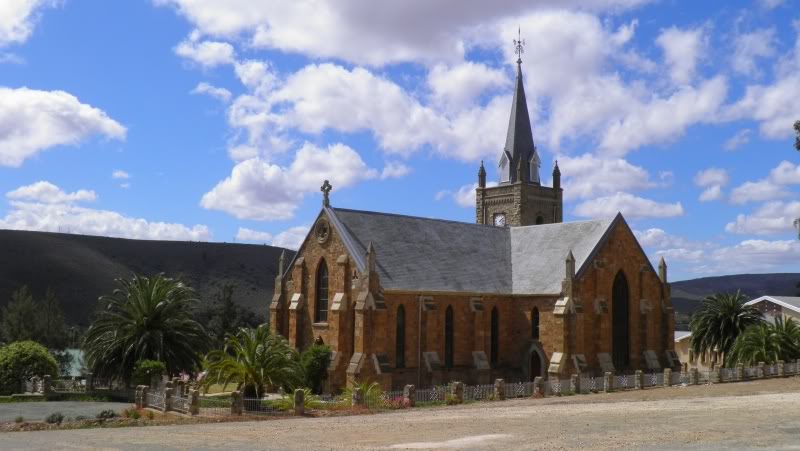
Uniondale’s Dutch Reformed Church. In January 1901, the town was ill-prepared for the arrival of the commando.
The young commandant
Gideon Jacobus Scheepers was born on 4 April 1878 in the Middelburg district of the former Transvaal. By the time he entered the Cape Colony, he already had military experience, but he was remarkably young for the responsibility awaiting him.
He had served in the artillery and worked with telegraphy and heliography. It is easy to underestimate the value of those skills today. In a war where a message might take hours to reach its destination, a man who understood communications already had an advantage.
By the end of 1900, the great set-piece battles had largely given way to a different kind of war. The British army controlled important towns and railways, but smaller Boer commandos kept moving. They damaged railway lines, raided post offices, commandeered horses and supplies, and disappeared before larger forces could trap them.
Scheepers entered the Cape Colony with Piet Kritzinger’s invading force in December 1900. It was a vast country of little towns, isolated farms, deep valleys and mountain passes. For a mobile commando, it presented both difficulties and opportunities.
There was rarely time to hold a town for long. The idea was to strike, disrupt the enemy’s communications and control, then move on. Uniondale had shown just how effective that approach could be.
Avontuur: war on the post office doorstep
Uniondale was not the end of Scheepers’ movements through this part of the Cape. Soon afterwards, the war also reached Avontuur, a small settlement farther east in the Langkloof.
The post office was a valuable target. In those days, it was far more than somewhere to post a letter. Messages arrived, news went out and the authorities kept in touch with the surrounding district. Break that connection and a town could find itself on its own for a while.
The commando damaged the post office and moved off towards the interior again. The raiders did not have to stay for long. News of such visits travelled much farther than the towns themselves.
At Knysna, far from any major battlefield, reports from Willowmore and Avontuur helped prompt the organisation of local defences. The town would eventually acquire a fort of its own, a remarkable little structure with an entirely different story to tell.
Avontuur’s streets look very different today from the way they did in Scheepers’ time. Yet there is still a post office, and an older building across the road. Once you know a commando rode into this village and tried to silence British communications, you look at its everyday buildings differently.
The old steam locomotive at Avontuur belongs to another chapter of the area’s history. The Langkloof railway reached here only after the war. Scheepers therefore did not attack this particular railway, although his interest in transport and communication helps explain why railway lines mattered so much during the conflict.
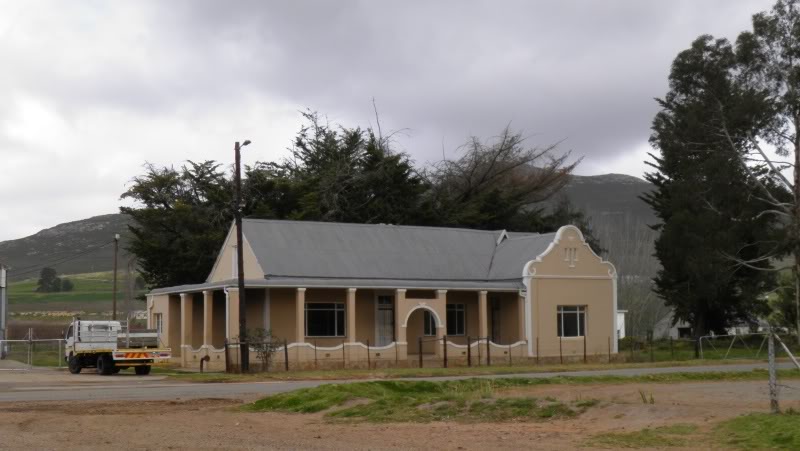
An older building opposite the post office in Avontuur. Could it possibly have been the post office in Scheepers’ day? It is enough to make you stop and wonder.
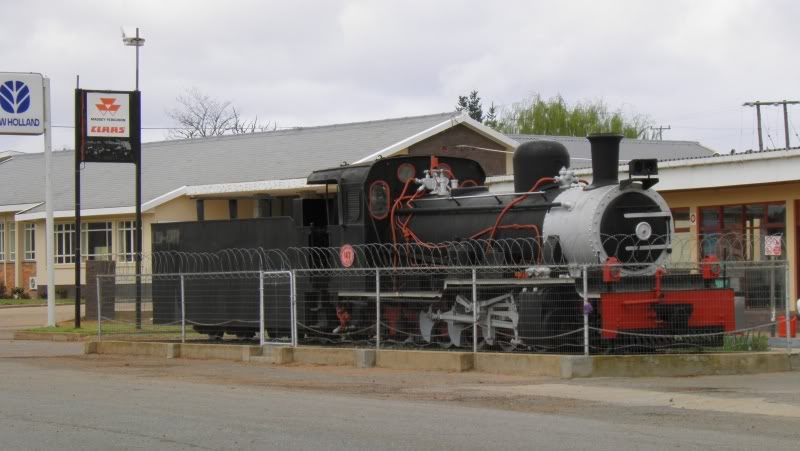
The steam locomotive at Avontuur. The narrow-gauge railway arrived only after the Anglo-Boer War.
Klaarstroom: the chase through Die Gang
Early in February 1901, the Boers appeared at Klaarstroom, a small village near the entrance to Meiringspoort. Today, it is the sort of place where travellers tend to slow down and admire the old buildings and the mountains.
There was little time to admire the scenery then. The commandos cut the telegraph connection and took supplies from the government store. According to an old account, they even found time that evening for a meal at the hotel, with whisky and cigars. Apparently, they paid for it.
On 2 February 1901, British patrols approached from the direction of Prince Albert, unaware of the number of Boer riders in and around Klaarstroom. Once they realised what they were up against, the soldiers turned and withdrew.
The Boers gave chase. The pursuit swept through a valley known as Die Gang, towards Remhoogte and Kredouw Pass. It is rough country, with hills and narrow stretches offering a retreating patrol little room for mistakes.
At Kredouw Pass, the British reached a stronger defensive position. Artillery could cover the approach, and the pursuit came to an end.
Three names have survived from the skirmish: British Lance Corporal John Boyd, Trooper Sidney P. Gishford of Brabant’s Horse, and a young Boer named Johannes Klue. Boyd was wounded during the fighting. According to one familiar local account, he later sought shelter at Wolwekloof, where Klue came across him. Boyd is said to have shot him at close range. Both men died. Other accounts differ about the precise circumstances, but the graves of all three men still recall the fighting.
Boyd and Gishford lie side by side at the Church of the Good Shepherd, the little Anglican church in Klaarstroom. Boyd was originally buried at Wolwekloof, but his remains were later moved to the churchyard. Klue’s grave remains at Wolwekloof on the farm Remhoogte. The two British crosses stand so close together that a passer-by might take them for one memorial. Look closely at the nameplates, though, because Gishford’s surname was incorrectly inscribed.
The landscape helps make sense of the story. Looking across Kredouw Pass, you can see how the mountains dictate movement. The roads still follow the gaps that the terrain allows. In 1901, the same country could offer a way out, or become a place where you were trapped.
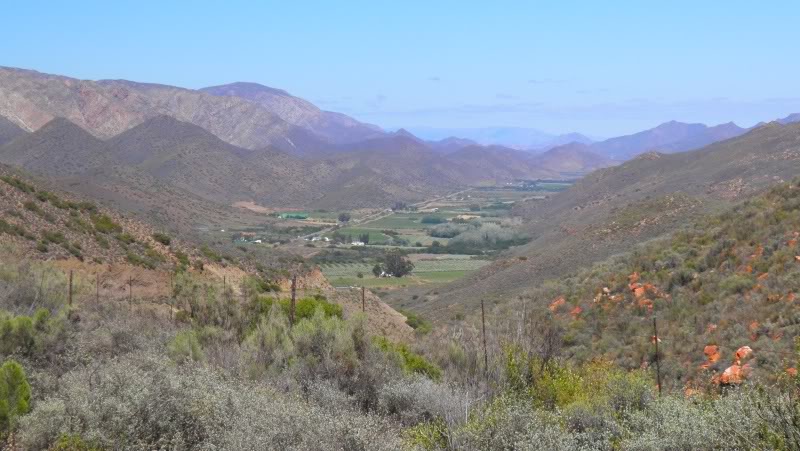
The Kredouw Pass area, where the terrain helped the British retreat.
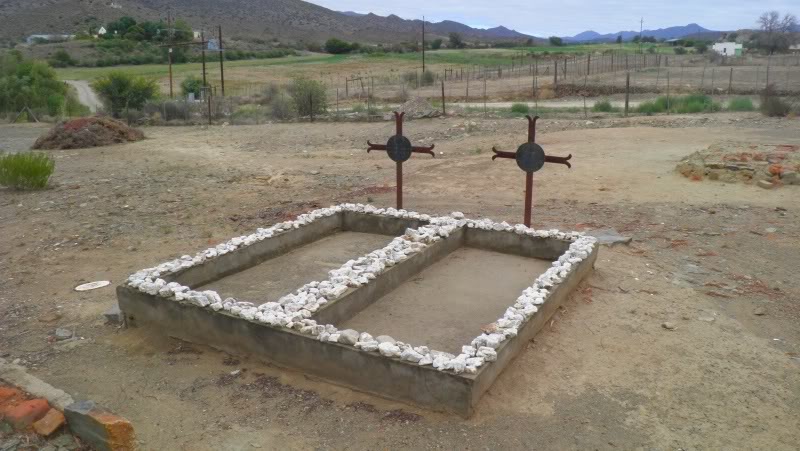
The two British graves beside Klaarstroom’s Anglican church: Lance Corporal John Boyd and Trooper Sidney P. Gishford. Both died following the skirmish of 2 February 1901.
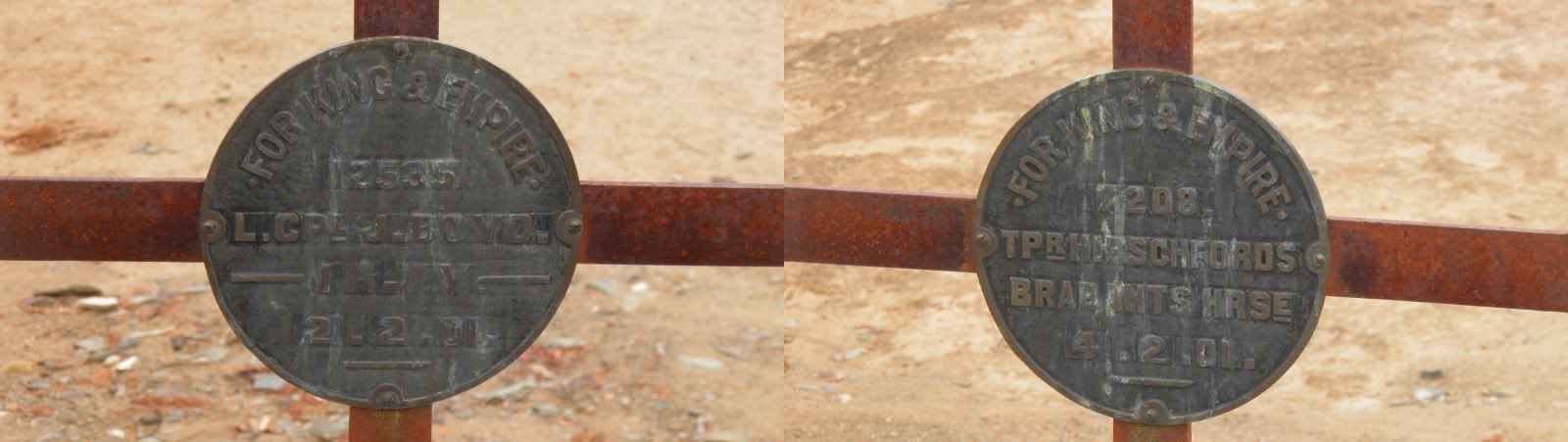
The two nameplates. Boyd’s is on the left and Gishford’s on the right. Gishford’s surname was misspelt on the cross.
The war moves on
The commandos did not settle down after Klaarstroom. They moved through the Karoo, doubled back, attacked railways and supply routes, and kept British patrols pursuing them across enormous distances.
For the British, it was an exhausting sort of warfare. You could occupy a town and station a garrison there, but you could not guard every mountain pass, farm track and river crossing at the same time. A commando needed only one opening to slip through.
Scheepers attacked Willowmore again in June 1901. This time the fighting was fierce and the town’s defenders suffered losses. Later, his movements took him southwards once more through the mountains between the Karoo and the Langkloof.
Baviaanskloof and the Kouga Mountains still offer a good sense of both the advantages and the hardships this country presented to a mobile commando. Not every road leads neatly to the next town. There are passes, steep gorges and long stretches between suitable places to rest horses and men.
By August, Scheepers’ men had returned to the Langkloof. The valley was about to become the scene of one of the best-known encounters of the later campaign.
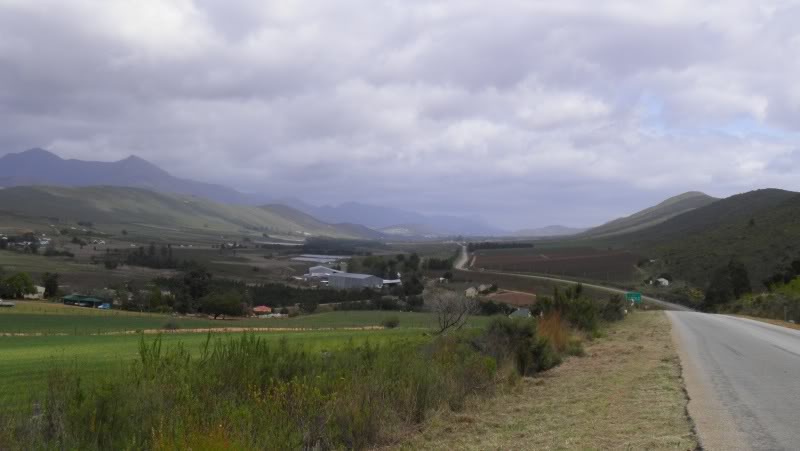
The Langkloof. Its valley and mountain ranges still shape the natural routes through the region.
Krakeel, Misgund and the everyday buildings of a war
Along the Langkloof route are names now associated with fruit farms, little shops and roadside signs: Kareedouw, Krakeel River, Misgund, Haarlem and Avontuur.
In 1901, they were part of a network of settlements where a shop or a post office mattered more than we might realise today. There was a British post at the Wabooms River, near the place where Joubertina would later develop. Small groups of riders could clash with the soldiers here and then move on along the valley.
Even the Krakeel River post office was caught up in the war. Today it is easy to drive past old buildings without imagining how much the loss of a single post office could mean to an isolated community. For a time, news could no longer travel through the valley as a matter of course.
Farther west, at Misgund, another group of Boers under Piet van der Merwe struck. A shop and a house were destroyed. Stone’s shop and the so-called Dry Hotel still feature in accounts of the war. A striking white building stands alongside the road today, one of those places that makes you look twice when you know something of the history.
It is not difficult to understand why these attacks made such an impression. The war was not confined to battlefields. It also arrived at the post office door, the shop counter and the farm gate.
There is even a local tale from Ongelegen about a farmer who supposedly refused to allow British soldiers to use his stables. The soldiers threatened to enter his name in their official books. According to the story, he replied that they could write it down with chicken manure. Whether those were his exact words matters less than the spirit of the story. In this valley, the war tested people’s everyday patience as well.
The stone houses, side roads and orchards are mostly part of a peaceful landscape today. Yet behind those ordinary place names lies a history of riders coming and going, messages never delivered and families who did not know who might appear at the gate the following morning.
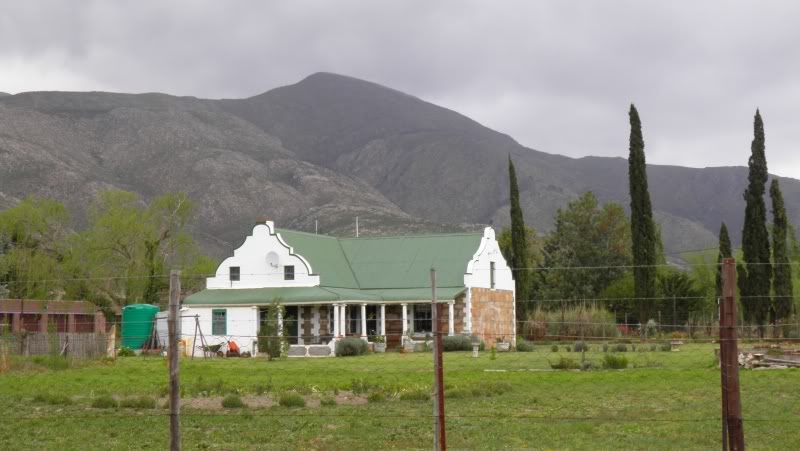
An old building in the Krakeel area, the kind of place that makes you wonder what the village looked like when the commandos came through.
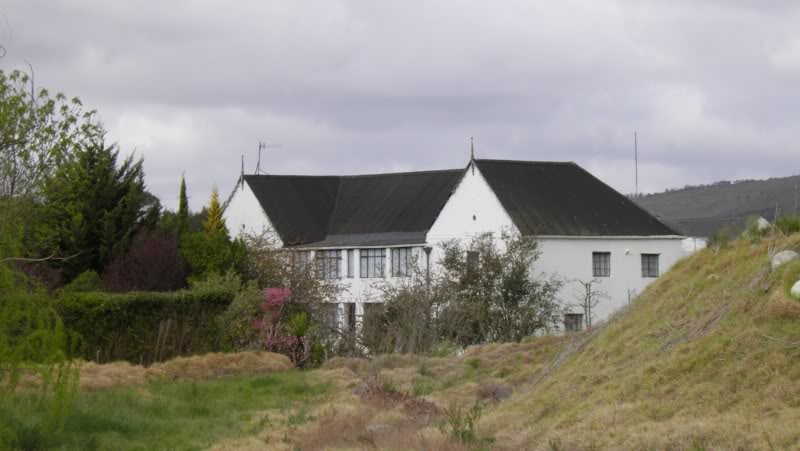
A striking white building at Misgund. We do not know whether the historic Dry Hotel survives, but if it does, you cannot help wondering whether this might be it.
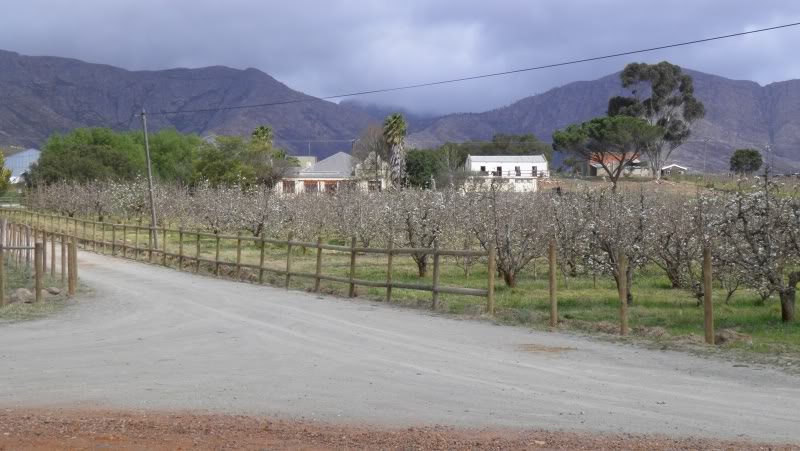
Orchards and a farmhouse at Ongelegen, where a local tale of a stubborn farmer lives on.
The battle near Avontuur
On 19 August 1901, the pursuit took a sharp turn in the Langkloof. The 10th Hussars attacked Scheepers’ commando near Avontuur. By this stage, the commando had grown to about 270 men.
The British horsemen came over the mountains from the direction of Uniondale, hoping to trap the Boers. But Scheepers’ men fought back and the attackers were forced to fall back along the slopes. Three British soldiers were killed: Sergeant-Major W. Clarke and Troopers Brassington and W. Saunders.
There is also a story about a boy known as Gesiggie, who travelled with the commando. According to the tale, he spotted four British soldiers behind a bush and, without even having a rifle of his own, persuaded them to surrender. It is one of those small wartime stories people remember precisely because it seems so unlikely. It remains a piece of local lore, but gives a flavour of the tales that grew around the commando.
The battle has not vanished completely from the landscape. Beside the R339, between Uniondale and the R62, stands a memorial to the encounter. Travellers usually come here for the mountain scenery and the road winding over the old pass. Few realise that the route once formed part of an armed pursuit.
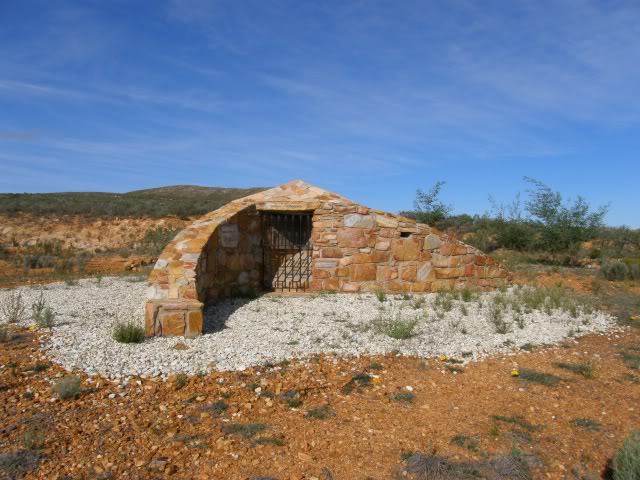
The sandstone memorial beside the R339, where travellers can still stop and discover a small piece of the 1901 campaign.
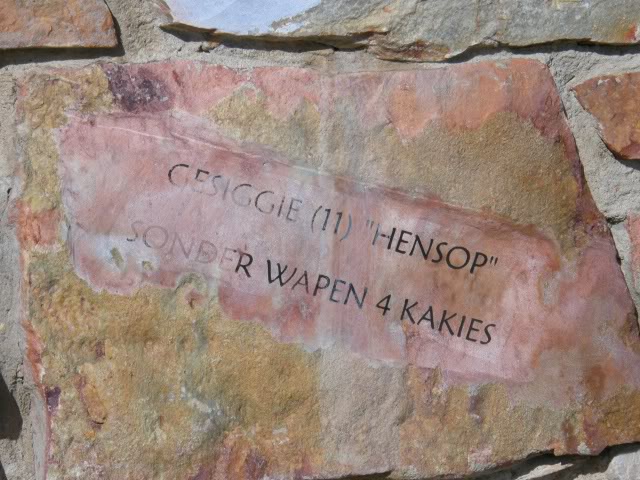
An inscription recalling the story of the young ‘Gesiggie’.
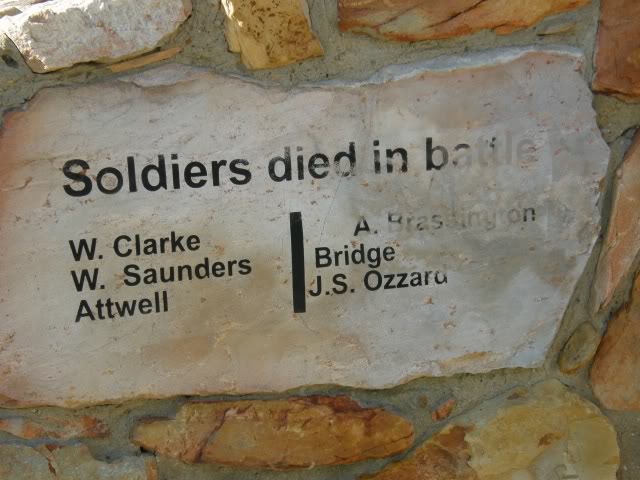
Another stone panel carries the names of soldiers commemorated here.
Scheepers moved farther west after the fighting. His commando had not been captured. By then, however, the Southern Cape knew very well that the young commandant had passed through this part of the colony.
The last ride on horseback
From the Langkloof, the trail led towards the Klein Karoo and the districts around Oudtshoorn and Prince Albert. The men moved through a world of widely separated towns where every opportunity to rest mattered. Where we can now drive between towns in an hour, the commando’s pace depended on its horses, the terrain and its supplies.
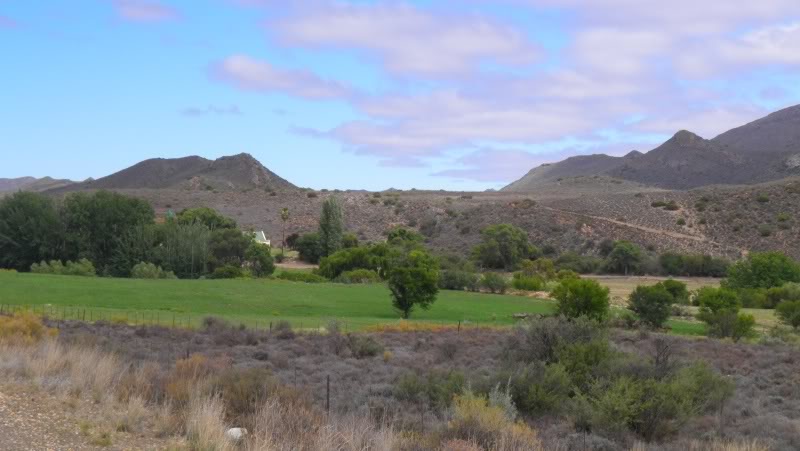
The wide landscapes of the Prince Albert district, through which Scheepers and his men moved in the last phase of the campaign.
By September 1901, Scheepers and his men were still on the move. British patrols were only part of their problem. Every day demanded food, water, rest for the horses and a safe route onwards. Mobility was the commando’s greatest advantage, but it came at a cost to men and animals alike.
In October, something changed. Scheepers became seriously ill. The man who had led his commando through hundreds of kilometres of difficult country could no longer keep up on horseback. His men carried him in a wagon, but the danger of being caught by pursuing British forces grew steadily greater.
At Koppieskraal, in the Prince Albert district, the commando left its sick commander behind so he could receive help. A British patrol found him there. For the young man who had so often escaped a larger force, there was no longer another pass beyond which to disappear.
His campaign through the Cape Colony was over. The roads, however, are still there. Anyone curious enough to stop and look around will discover that there are stories everywhere.
For Scheepers himself, one final journey still lay ahead, through the railway stations and hospitals of the Karoo to Graaff-Reinet.
Continue reading: