Royal Enfield Bear 650: Retro Style with Dirt-Road Attitude
Not every motorcycle needs a mountain of horsepower and a screen full of riding modes. Sometimes a willing twin-cylinder engine, a comfortable riding position and a little personality are more than enough.
Royal Enfield has built its modern reputation on motorcycles that are simple, characterful and enjoyable rather than obsessed with outright performance. The company traces its motorcycle history back to 1901, making it one of the oldest names still in continuous production.
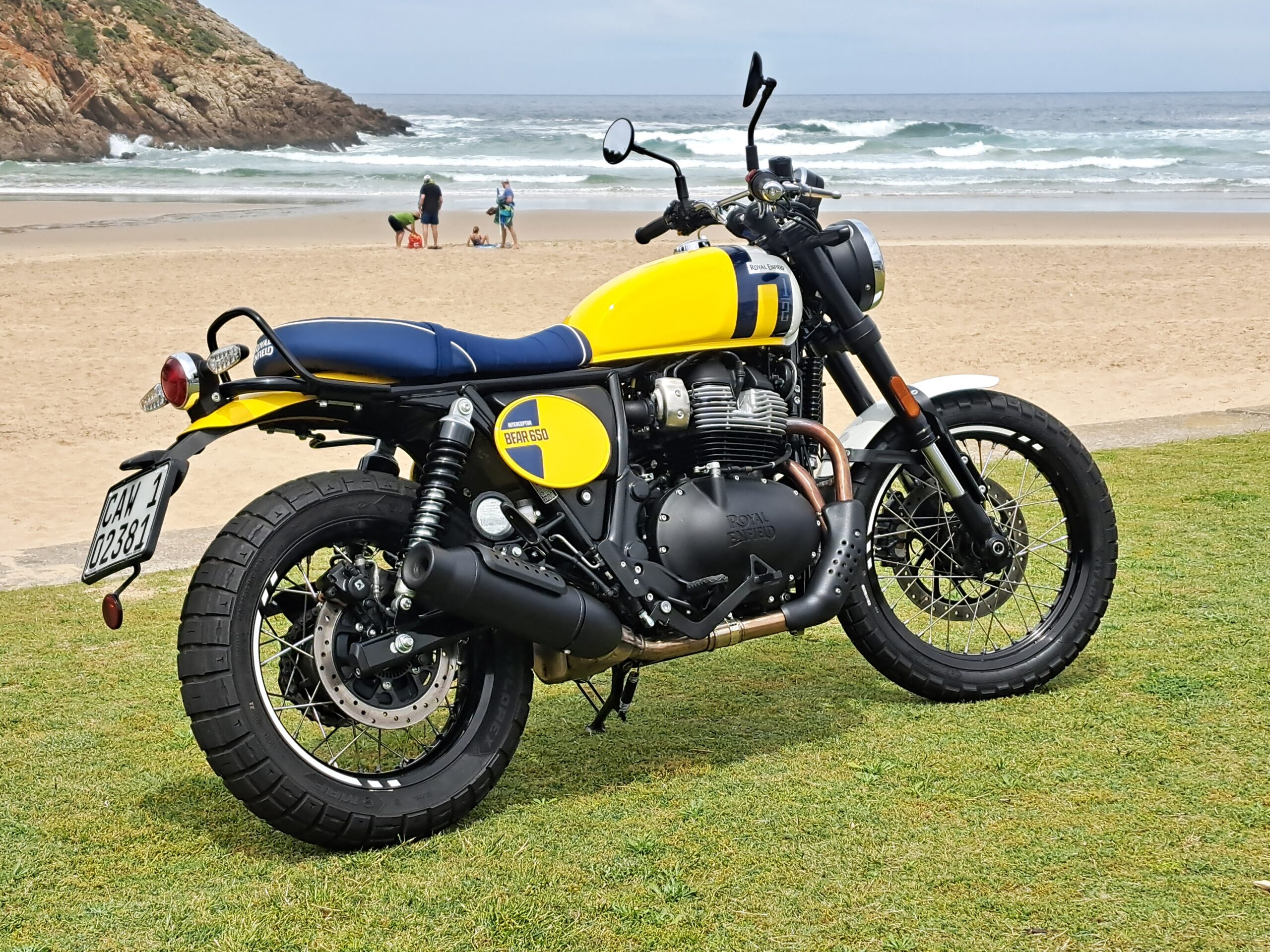
The Bear 650 fits neatly into that philosophy. It is essentially Royal Enfield's take on a modern scrambler, using the company's proven 648 cc parallel-twin engine but adding more suspension travel, a 19-inch front wheel, dual-purpose tyres, upright ergonomics and styling inspired by the desert racers of the 1960s.
A name with a story
The Bear pays tribute to one of the more interesting chapters in Royal Enfield's history. In 1960, a young Eddie Mulder won the gruelling Big Bear Run in California aboard a Royal Enfield, carrying competition number 249.
That victory provides the inspiration behind the Bear's scrambler styling, from its competition-style side panels to its purposeful stance.
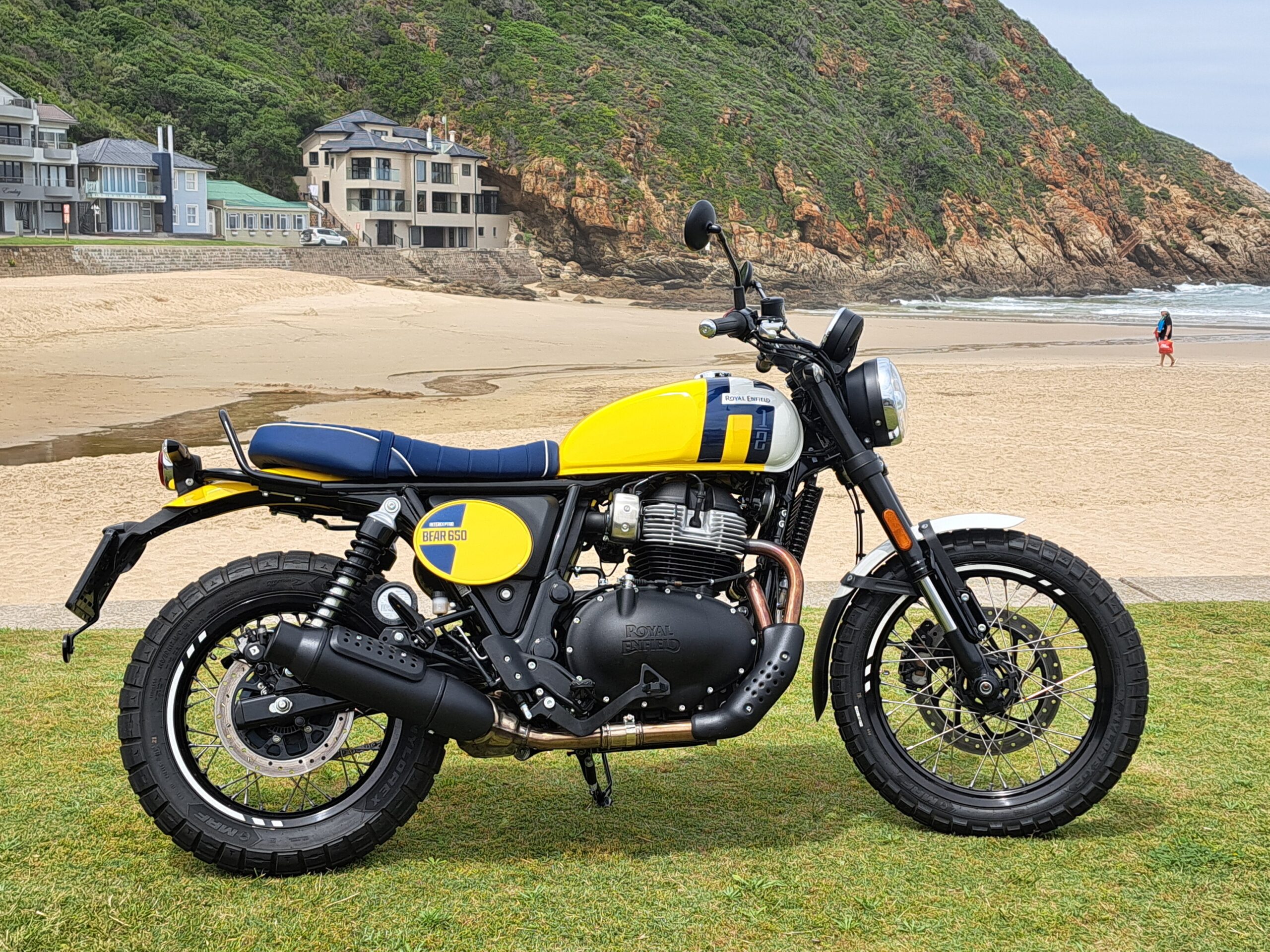
The motorcycle in our photographs wears the striking Wild Honey colour scheme, combining a yellow fuel tank with white detailing and a dark blue seat. It is separate from the Two Four Nine edition, which pays a more direct visual tribute to Mulder's historic race number.
Familiar engine, different character
At the heart of the Bear is Royal Enfield's familiar air- and oil-cooled 648 cc parallel twin. It produces a claimed 34.9 kW and 56.5 Nm, delivered through a six-speed gearbox.
Those figures might not sound particularly exciting in a world of adventure motorcycles producing more than 100 kW, but that rather misses the point. The Bear is about usable torque, easy-going performance and enjoying a motorcycle without constantly chasing higher speeds.
The exhaust is one of the more noticeable changes. Instead of the Interceptor's twin silencers, the Bear gets a low-mounted 2-into-1 system. Royal Enfield says this arrangement contributes to an increase in peak torque compared with the other models using its 650 twin.
It also gives the motorcycle a distinctive appearance while keeping the silencer away from the rider's leg and allowing easier fitting of soft luggage.
Built for the roads in between
The Bear is more than an Interceptor with different paintwork. Its suspension includes a 43 mm Showa upside-down fork with 130 mm of travel, while the twin rear shocks offer 115 mm.
The front wheel measures 19 inches, with a 17-inch wheel at the rear. Dual-purpose tyres, 184 mm of ground clearance and switchable rear ABS give the Bear some useful versatility when the tar runs out.
However, it is important to understand what sort of motorcycle this is. At approximately 214 kg, with an 830 mm seat height, it is not a lightweight trail bike.
For commuting, Sunday breakfast runs, broken tar and the occasional gravel road, the Bear makes plenty of sense. Deep sand, rocky mountain tracks and serious off-road riding are better left to motorcycles designed specifically for those conditions.
Classic looks, modern technology
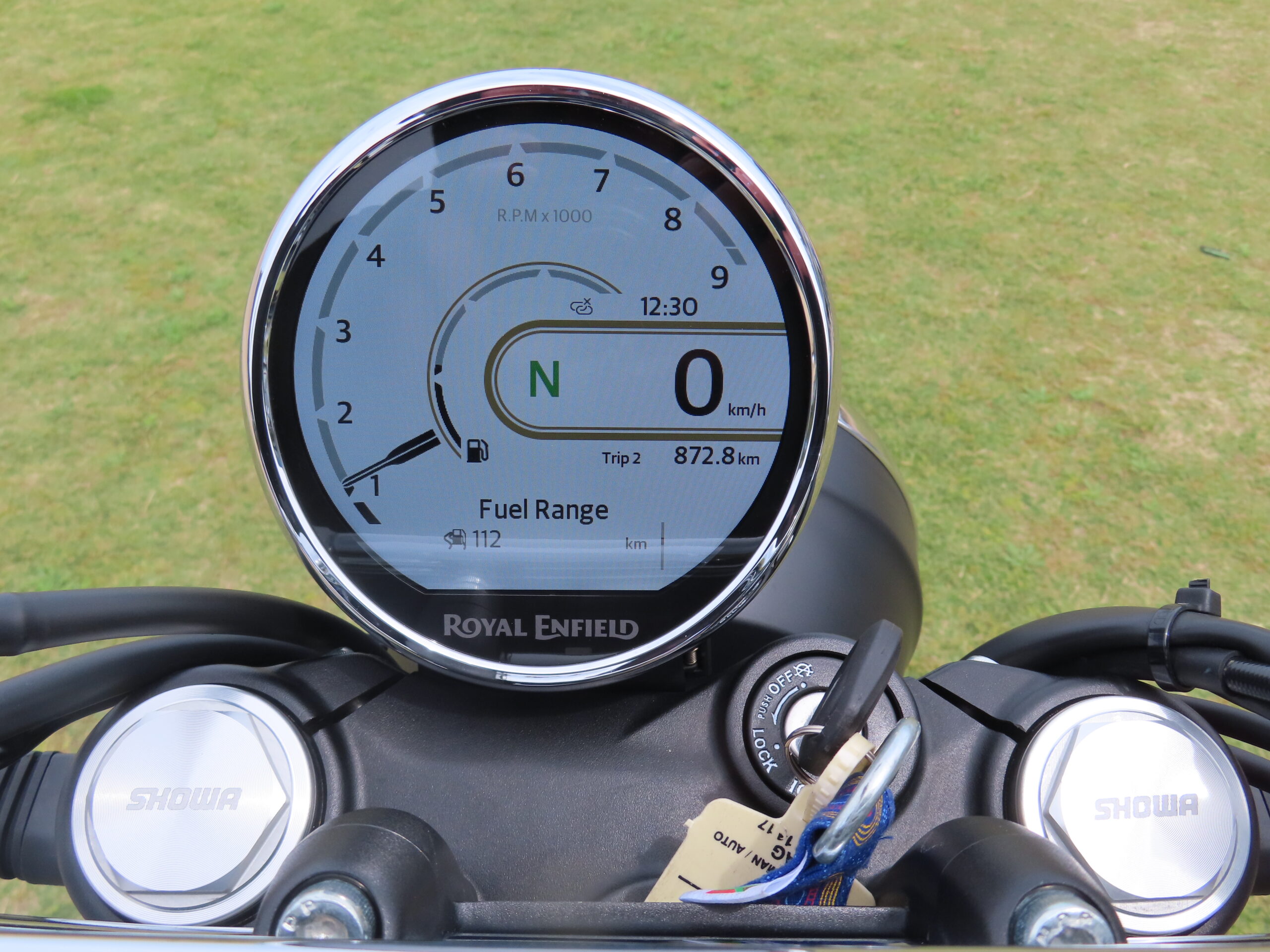
One of the interesting contrasts is the instrument panel. The Bear gets Royal Enfield's circular four-inch Tripper Dash TFT display, which combines the appearance of a traditional round instrument with modern digital functions.
The display provides riding information and smartphone-connected navigation, including map guidance. There is also LED lighting and a USB-C charging point.
Where does the Bear fit?
Royal Enfield already offers two obvious alternatives in its own showroom. The Interceptor 650 is an easy-going retro roadster, while the Himalayan 450 is a more purpose-built adventure machine.
The Bear sits somewhere between those two ideas. It has the familiar character of the 650 twin, a more purposeful stance and enough rough-road ability for the occasional gravel detour.
It is also worth considering what you actually want from a motorcycle. Riders who regularly tackle poor roads or venture into remote areas will probably find the Himalayan the more practical choice.
Those who spend most of their time on tar might be perfectly happy with the Interceptor.
But for someone who wants a motorcycle with a bit of individuality, something equally at home outside a coffee shop or on a quiet country road, the Bear has a compelling appeal.
Personality over complexity
Perhaps the strongest argument for the Bear 650 is that it does not try to be everything to everybody. It is not a hardcore off-road machine, nor is it attempting to compete with high-performance adventure motorcycles.
Instead, it offers a straightforward twin-cylinder engine, classic scrambler styling, useful modern equipment and a riding philosophy that places enjoyment ahead of outright performance.
In a market crowded with increasingly complicated motorcycles, the Bear reminds us that riding need not be complicated to be worthwhile. Sometimes a good engine, the right road and a motorcycle with a story of its own are enough.
Bear 650 at a glance
- Engine
- 648 cc, air- and oil-cooled parallel twin
- Maximum power
- 34.9 kW at 7 150 r/min
- Maximum torque
- 56.5 Nm at 5 150 r/min
- Gearbox
- Six-speed, chain drive
- Front suspension
- 43 mm Showa USD fork, 130 mm travel
- Rear suspension
- Twin shocks, 115 mm travel
- Wheels
- 19-inch front; 17-inch rear
- Seat height
- 830 mm
- Kerb weight
- 214 kg
- Ground clearance
- 184 mm
- Fuel capacity
- 13.7 litres
- Brakes
- Disc brakes, dual-channel ABS, switchable at the rear
- SA list price
- R141 700 (Wild Honey)
Price and specifications: The South African Wild Honey price was checked against Moto-Royale's published price list in November 2026. Price excludes on-the-road costs and may change. Technical figures are manufacturer specifications.
SHARE THIS ARTICLE
Enjoyed the ride? Share the story.