Honda RVF400 NC35: small bike, very big pedigree
Three decades after it first appeared, Honda’s RVF400 NC35 still looks every bit the exotic sports bike. Park it next to a modern Fireblade and the little V4’s pedigree becomes impossible to ignore.
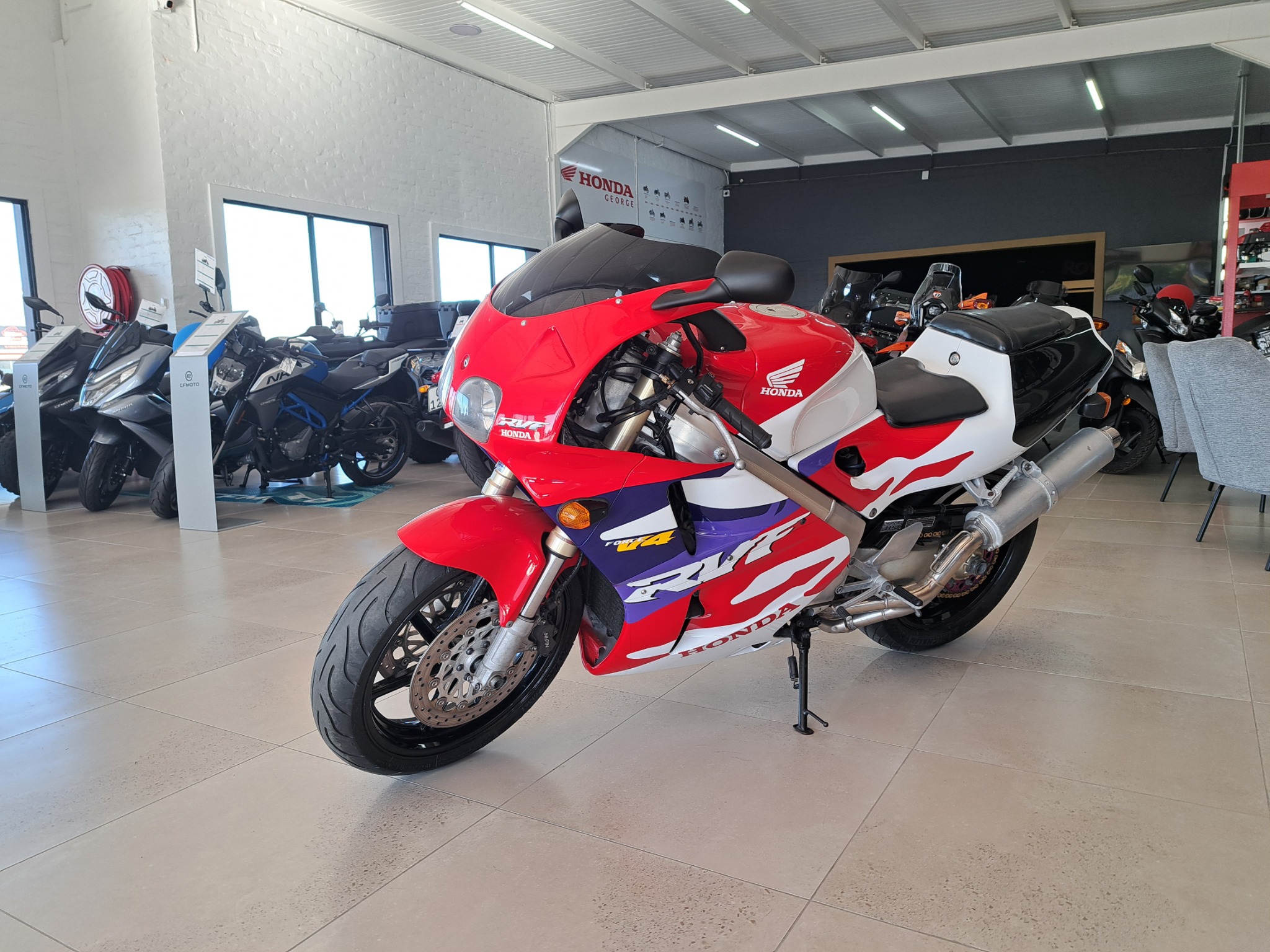
Park a 1990s sports bike next to a modern superbike and you normally expect the older machine to look exactly that, old.
Yet standing here alongside Honda’s CBR1000RR-R Fireblade SP, the little RVF400 NC35 somehow still looks right. More than three decades separate the two, but the RVF’s proportions, twin headlights, single-sided swingarm and red, white and purple race-inspired colours have aged remarkably well.
And this was no ordinary 400.
From NC30 to NC35
Honda launched the RVF in 1994 as the successor to the hugely popular VFR400R NC30. The NC30 itself had become something of a cult motorcycle, essentially giving riders a taste of the exotic VFR750R RC30 in a smaller, more accessible package. The RVF took that idea another step, drawing its visual inspiration from Honda’s new RVF750 RC45 superbike.
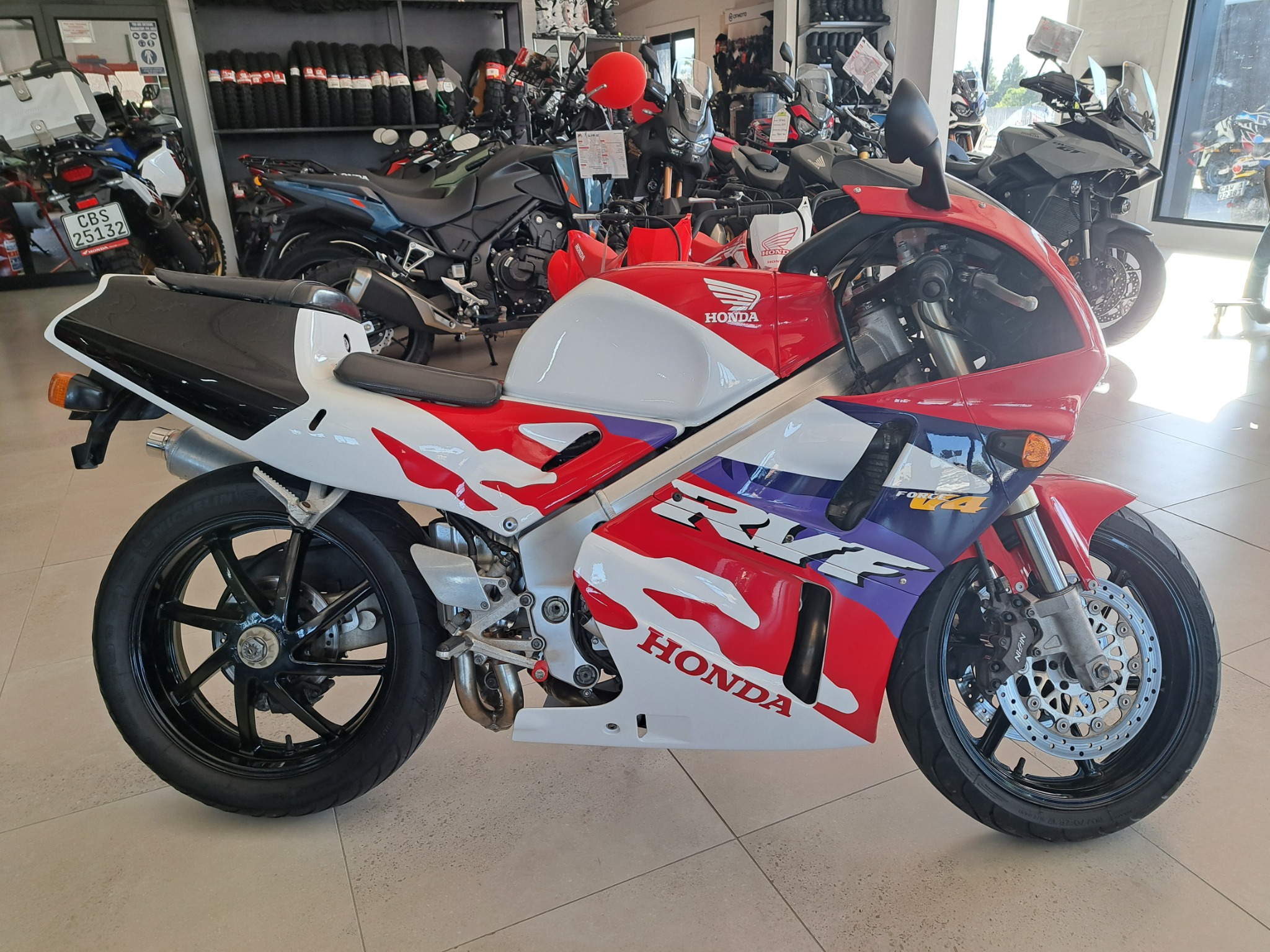
A tiny V4 with big character
Under the fairing sat one of the RVF’s defining features, a 399 cc, liquid-cooled 90-degree V4 with gear-driven camshafts. Honda quoted 53 PS, roughly 39 kW, at 12 500 r/min, with around 37 Nm at 10 000 r/min. Those figures seem modest today, but this was never about brute force. The engine loved revs, delivered its power cleanly and produced the distinctive mechanical whine that made Honda’s small V4s so memorable.
Quick facts
- Launched
- 1994
- Engine
- 399 cc, liquid-cooled 90-degree V4
- Power
- 53 PS (approximately 39 kW) at 12 500 r/min
- Torque
- Approximately 37 Nm at 10 000 r/min
- Chassis
- Aluminium twin-spar frame and Pro-Arm single-sided swingarm
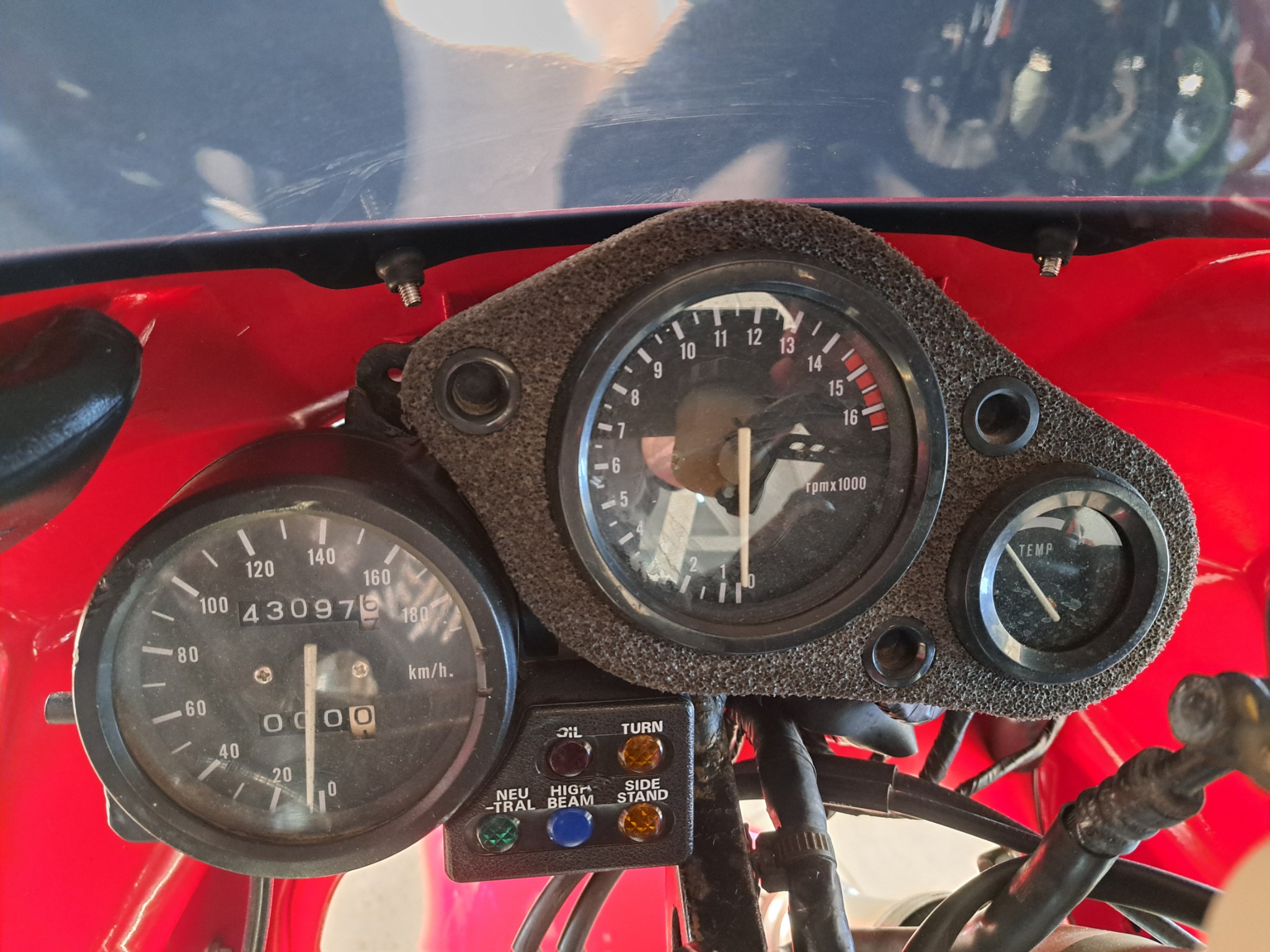
Built for corners
Honda also went to considerable lengths with the chassis. The NC35 gained a new aluminium twin-spar frame, 41 mm upside-down front forks, twin 296 mm front discs with four-piston calipers and a 17-inch rear wheel, replacing the NC30’s 18-inch item. The famous Pro-Arm single-sided swingarm remained. Honda’s own development brief specifically targeted sharper cornering and greater control on tight, winding roads.
And that is where the RVF earned its reputation.
In the 1990s, Japan’s 400 cc sports class was fiercely competitive. The RVF had to fight machines such as the Kawasaki ZXR400, Yamaha FZR400RR, Suzuki GSX-R400R and Honda’s own CBR400RR. The Kawasaki might have shouted louder, and some rivals could match or exceed the Honda on outright performance, but few combined engineering, finish, handling and sheer desirability quite like the RVF.
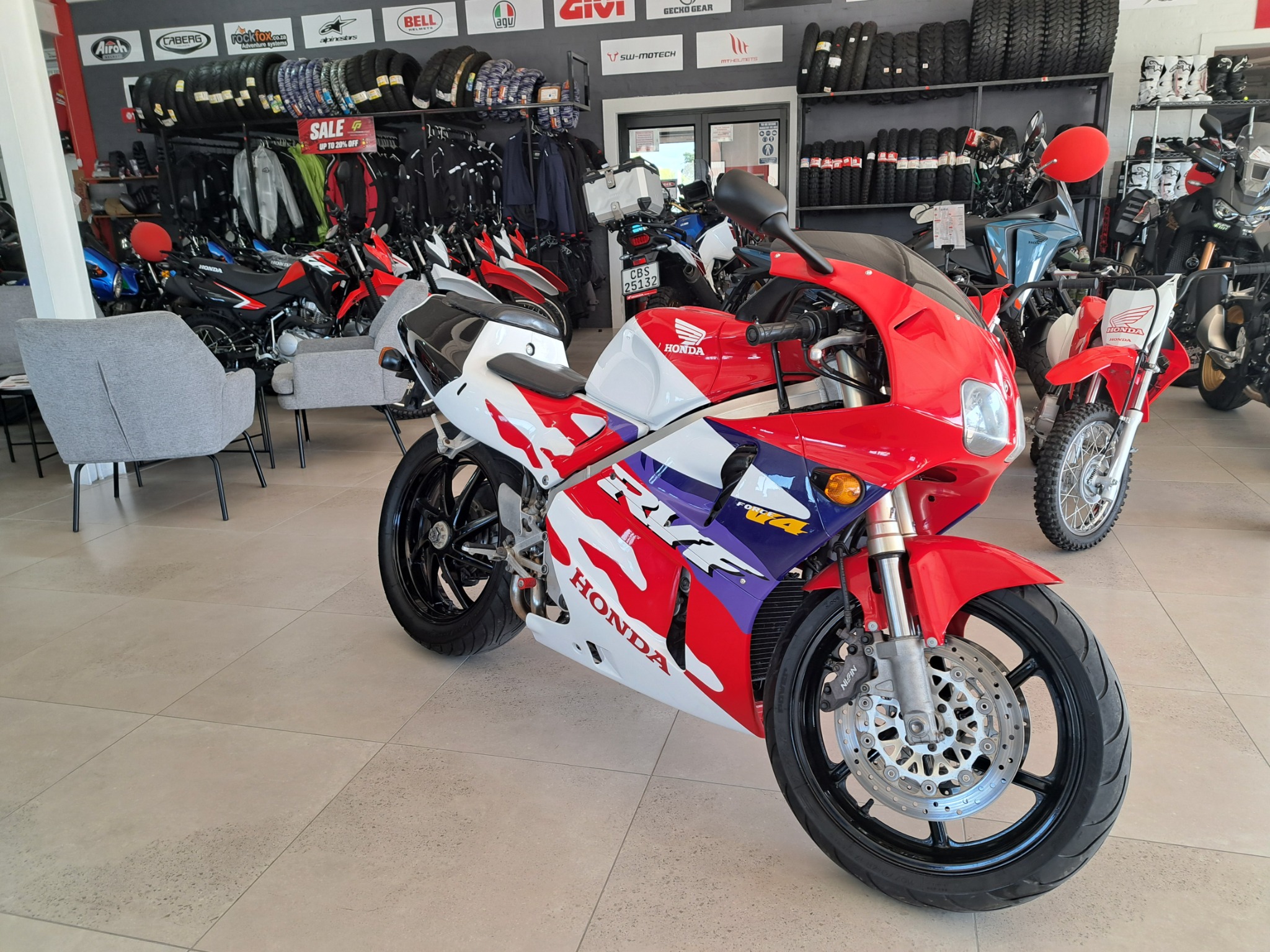
Then and now
Here in South Africa we saw plenty of VFR400 NC30s over the years. The RVF NC35 was always a much rarer sight, which makes finding one this original-looking today particularly special.
Then look at what is standing beside it.
The CBR1000RR-R Fireblade SP produces 160 kW and 113 Nm, has electronic suspension, sophisticated rider aids, cornering ABS and braking performance unimaginable when the RVF appeared. Yet at 201 kg kerb weight, Honda’s modern superbike is still remarkably light considering the staggering performance on offer.
Technically, there is simply no comparison. Emotionally, though, it is far closer.
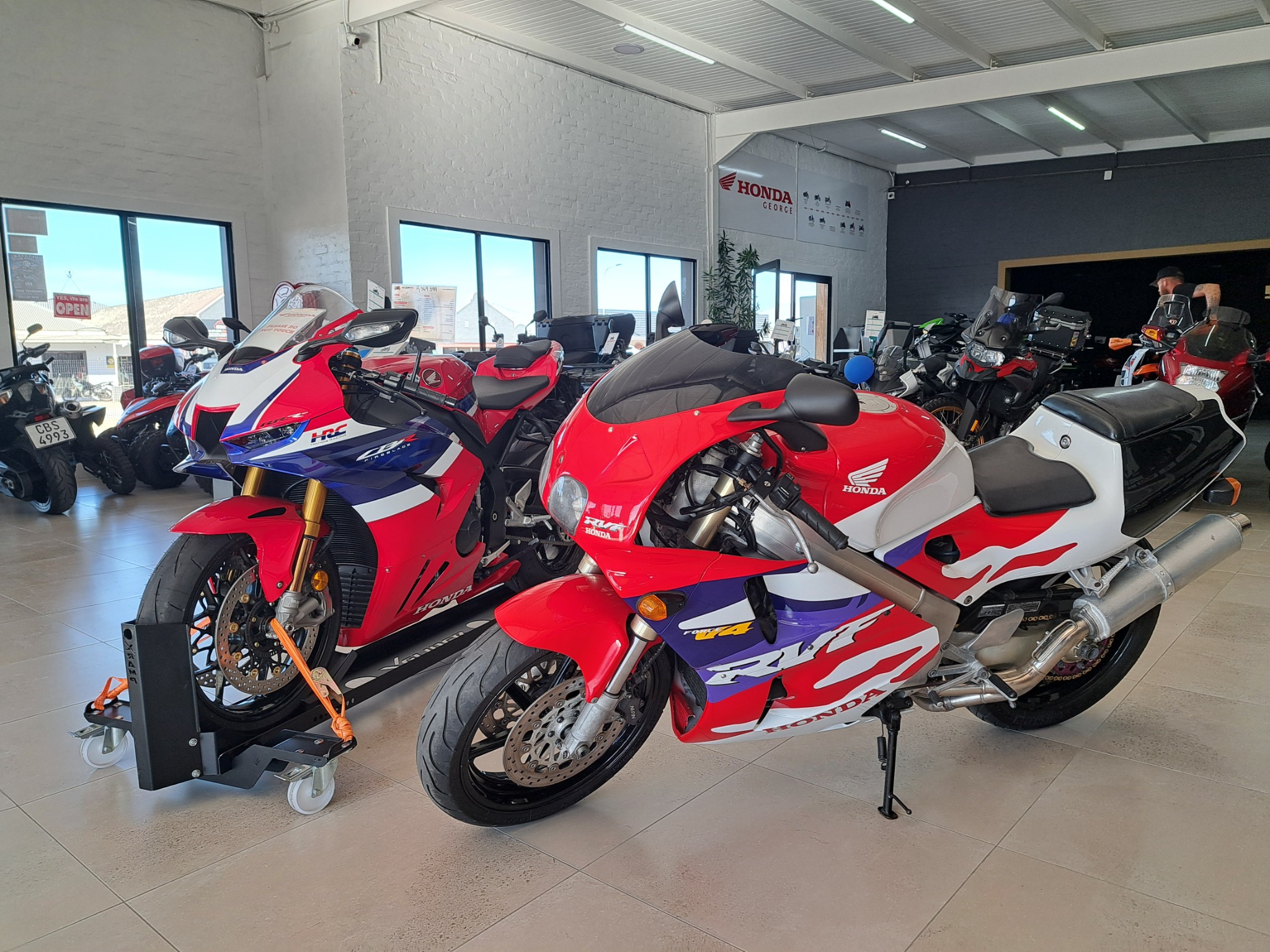
Both represent Honda at a time when the company was determined to show what it could do with a sports motorcycle. The Fireblade does it with electronics, aerodynamics and 160 kW. The RVF did it with a tiny V4, gear-driven cams, exquisite engineering and a chassis designed to make every corner matter.
Thirty-odd years later, the little RVF still manages to hold its own in the looks department. And perhaps that tells you everything you need to know about why the NC35 has become so collectible today.
SHARE THIS ARTICLE
Enjoyed the ride? Share the story.