2027 Triumph Tiger 1200: A Different Direction for the Adventure Giant
More power, a self-lowering suspension system and radar technology at both ends. But Triumph's biggest decision is also its most controversial: even the Rally models now have a 19-inch front wheel. Has the big Tiger become a better adventure tourer by becoming less of an off-road specialist?
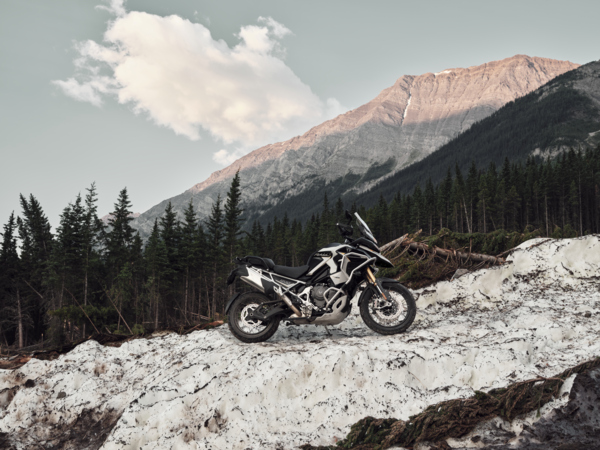
For years, the big adventure motorcycle market has been caught in an interesting contradiction. Buyers want machines capable of crossing deserts and tackling difficult mountain tracks, yet most of their actual riding happens on tar. They want serious off-road suspension, but also excellent road manners, passenger comfort and enough electronics to make a long journey less tiring.
Triumph has clearly been looking at how owners really use their motorcycles. Its new Tiger 1200, unveiled on 27 October ahead of EICMA 2026, is one of the more telling responses to that question.
The flagship Tiger gains an updated three-cylinder engine, a sophisticated semi-active suspension system and front and rear radar. It is also substantially easier to manage at a standstill. But the change likely to generate the most conversation among adventure riders involves something much simpler: wheel size.
Goodbye, 21-inch front wheel
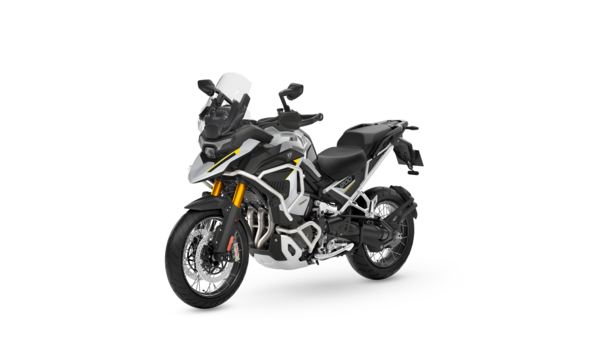
All four Tiger 1200 variants now use a 19-inch front wheel and a 17-inch rear, including the Rally Pro and Rally Explorer. Previously, those Rally versions used a more off-road-oriented 21-inch front and 18-inch rear combination.
Triumph has also standardised suspension travel at 200 mm front and rear. That is less than the 220 mm previously offered on the Rally models.
This is more than a styling alteration. A 21-inch front wheel generally offers advantages when rolling over rocks, ruts and other obstacles. An 18-inch rear wheel also provides more options among dedicated off-road tyres. The new 19/17 arrangement is better suited to the sort of road-biased adventure riding that involves fast tar sections, mountain passes and maintained gravel.
For a rider spending most weekends on the Outeniqua or Seven Passes roads, the compromise may make perfect sense. For someone planning difficult sand tracks, rocky climbs or demanding two-track routes, it deserves closer consideration.
The Rally versions still have side-laced spoked wheels, additional protection and an Off-road Pro riding mode. They have not suddenly become road motorcycles in adventure clothing. But Triumph is no longer pretending that the same equipment makes every kind of riding equally easy.
More muscle from the T-Plane triple
The new Tiger retains Triumph's 1,160 cc T-Plane three-cylinder engine, now producing 116.2 kW at 9,250 r/min and 130 Nm at 6,750 r/min. Maximum power rises by 8 PS over the outgoing version.
The T-Plane crankshaft gives the engine a distinctive firing character, intended to combine useful low-speed response with the strong upper-rev performance associated with a triple. For 2027, Triumph has revised the cylinder head, pistons, valves, fuelling, exhaust and camshaft profiles. The first three gear ratios have also been changed.
Those revisions are not all about the number at the top of the rev range. Triumph claims improved tractability, smoother gear changes and better control at walking pace, with a lower crawl speed. The crankshaft, balancer shaft, gearbox and shaft drive have received further refinement work.
That last point matters on a large adventure motorcycle. A powerful engine is enjoyable on an open road, but predictable response when negotiating a steep driveway, a rocky turn or slow traffic is often more valuable than another few kilowatts.
Engine: 1,160 cc T-Plane triple
Power: 116.2 kW
Torque: 130 Nm
Gearbox: Six-speed with Triumph Shift Assist
Final drive: Shaft
Wheels: 19-inch front / 17-inch rear
Suspension travel: 200 mm front and rear
Fuel capacity: 20 L (Pro) / 30 L (Explorer)
Wet weight: 250–268 kg, depending on model
The Tiger that lowers itself
Perhaps the most useful new technology is the SHOWA EERA HeightFlex semi-active suspension system. As the motorcycle slows to a stop, the suspension automatically lowers the seat by 30 mm. When the rider pulls away, it raises the motorcycle to its normal riding height again.
The system works with a two-position seat adjustment and optional low seat. Triumph quotes a minimum standstill seat height of 790 mm with the appropriate combination, although equipment availability may vary by market.
That is a meaningful development on a motorcycle weighing between 250 and 268 kg fully fuelled, depending on version. Plenty of experienced riders can manage a tall adventure bike once it is moving. It's manoeuvring on uneven ground, stopping on a cambered road or backing a loaded motorcycle out of a parking space that can be less enjoyable.
The 49 mm front fork and rear monoshock provide electronically managed damping, with Firm, Medium and Soft settings. The suspension also adjusts to load, useful when switching between solo riding, luggage and a passenger. Triumph has added a Centre Stand Assist function that temporarily increases preload to make lifting the bike onto its centre stand less demanding.
These are practical solutions to real problems, not just technology for the sake of filling a specification sheet.
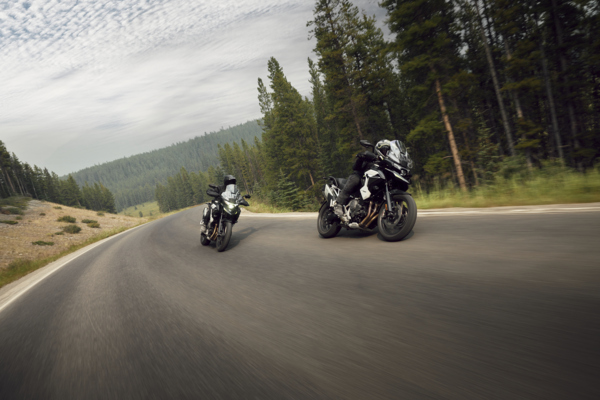
Radar at the front and back
The second major step forward is a new Bosch radar-based rider-assistance system. Cameras and warnings have become familiar in cars, but manufacturers are increasingly adapting comparable technology to motorcycles, where lean angle and rider movement complicate the task.
At the front, the Tiger offers adaptive cruise control, forward collision warning, riding-distance assistance and emergency brake assistance. At the rear, radar provides blind-spot alerts and warnings when another vehicle is following too closely. Group Ride Assist is intended to improve the behaviour of adaptive cruise control when travelling among motorcycles.
These functions could make long motorway journeys less tiring, particularly when riding through busy traffic or spending hours behind other vehicles. But they do not remove the need to observe the road, maintain an appropriate following distance or brake yourself when necessary. The assistance systems have operating limits.
For riders travelling regularly between George and Cape Town, adaptive cruise control might prove more useful than yet another performance setting. Equally, some riders will prefer to keep the interventions to a minimum. The important question will be how naturally the technology works when conditions are not ideal.
A more connected cockpit
There is a new seven-inch high-definition touchscreen with wireless Apple CarPlay and Android Auto compatibility. Triumph says the touchscreen can be operated at very low speeds, while handlebar switches and voice commands provide access while riding.
Practical touches include a waterproof phone compartment in the top of the fuel tank, USB-C charging and active cooling to help manage smartphone heat. A new adaptive LED headlight adds illumination into bends, while redesigned seats with thicker foam, heated seats and three-stage heated grips reinforce the touring emphasis.
The result sounds impressive, although reliability, usability in rain and dust, and how easily the menus can be operated with gloves are matters for a proper road test.
Four Tigers, two different priorities
The range continues with four versions. The GT Pro combines cast wheels with a 20-litre tank, while the GT Explorer adds a 30-litre tank for extended touring range. Those who prefer spoked wheels and more protection can choose the Rally Pro with its 20-litre tank, or the Rally Explorer with 30 litres.
Explorer models also gain tyre-pressure monitoring and revised ergonomics, while Rally models include more off-road-focused equipment and riding modes. The wet weights are 250 kg for GT Pro, 255 kg for Rally Pro, 260 kg for GT Explorer and 268 kg for Rally Explorer.
Those numbers deserve attention. Even with helpful electronics and a clever lowering system, this remains a large motorcycle. The Rally Explorer in particular is better thought of as a powerful long-distance traveller capable of gravel-road adventure than a substitute for a lighter, more dedicated off-road machine.
What about its rivals?
The Tiger 1200 competes in a demanding part of the market. BMW's R 1300 GS and GS Adventure are obvious alternatives, while the KTM 1390 Super Adventure family and Ducati Multistrada range offer different mixtures of engine performance, technology and off-road ambition. Honda's Africa Twin, particularly its more off-road-oriented variants, presents a different interpretation of adventure riding.
Triumph's triple-cylinder character and shaft drive are important attractions. The new rider aids and self-lowering suspension should also appeal to buyers who want an expensive touring motorcycle to be easier to live with every day. On the other hand, riders who place difficult off-road performance above touring comfort will notice the smaller Rally wheels and the substantial wet weight.
There is also a simple question of value. Triumph lists UK prices from £18,295 for the GT Pro to £20,575 for the Rally Explorer, with deliveries planned there from December 2026. No confirmed South African price or arrival date for the redesigned range was available at the time of writing, so converting those British prices directly into rand would be misleading.
For local after-sales support, Triumph South Africa lists TEX Motorcycles in George as an approved Triumph service centre. That does not make TEX a new Triumph sales dealership, and availability or purchase enquiries should go through the authorised sales network.
A better Tiger for the riding people actually do?
There is plenty to admire in the new Tiger 1200. A more responsive triple, refined shaft drive, useful suspension adjustment and sophisticated radar assistance all make sense for a motorcycle built to cover distance. The lower seat at a stop could be especially valuable to owners who appreciate the performance of a large adventure bike but find its height awkward in everyday situations.
Still, the move to a 19-inch front wheel across the range is impossible to ignore. Triumph is making a choice, and it is one that may not suit every adventure rider. For long days on tar with gravel detours, it looks sensible. For difficult tracks and soft sand, there are reasons to prefer the old 21-inch Rally arrangement or a more off-road-focused rival.
The new Tiger therefore asks an interesting question: should a large adventure motorcycle be judged by the extreme terrain it might one day tackle, or by how well it handles the roads its owner rides most often?
Triumph's answer is becoming clear. Whether riders agree will be decided when the 2027 Tiger reaches the road, and perhaps a few properly challenging gravel routes.
SHARE THIS ARTICLE
Enjoyed the ride? Share the story.