2027 Honda Fireblade: The Legend Reborn
Honda has comprehensively redesigned its flagship Fireblade for 2027. With an extensively reworked chassis, innovative intake technology and a new HRC Works Edition, the Japanese manufacturer is making a serious statement about its superbike ambitions.
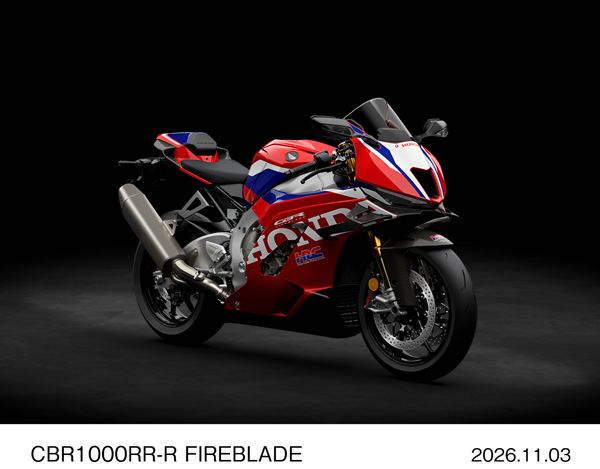
There are few names in motorcycling that carry quite the same weight as Fireblade.
Since the original CBR900RR appeared in 1992, Honda's Fireblade has represented a particular approach to superbike design: serious performance combined with precise handling and a motorcycle that responds naturally to its rider.
Over the years, the Fireblade has become more powerful, more sophisticated and increasingly focused on racetrack performance.
But the competition hasn't exactly been standing still.
European manufacturers have become exceptionally strong in the premium superbike category, with Ducati, BMW and Aprilia continually raising the standard.
Honda's response at EICMA 2026 is significant.
The new CBR1000RR-R Fireblade is not simply an updated version with revised styling and a new electronics package.
Honda says approximately 75% of its components have been newly designed for the 2027 generation.
That includes extensive changes to the chassis, engine breathing, suspension and aerodynamics.
There is also an entirely new flagship version, the Fireblade HRC Works Edition, developed with World Superbike competition firmly in mind.
Importantly, Honda South Africa has already confirmed that the new Fireblade is scheduled to arrive locally in 2027.
Developed from the racetrack
One of the most interesting aspects of the new Fireblade is Honda's approach to its development.
The company has worked closely with Honda Racing Corporation, or HRC, to improve the motorcycle's competitiveness in World Superbike racing.
Honda South Africa says development began with the requirements of the race machine before those lessons were applied to the production motorcycle.
That is a different starting point from simply building a very fast road motorcycle and adapting it for racing.
The objective is improved cornering performance, stability under hard acceleration and braking, and greater control at the limit.
These are qualities that matter enormously on a racetrack, where lap times depend on more than outright engine power.
A new chassis with a different kind of rigidity
The 2027 Fireblade uses a redesigned aluminium twin-tube frame.
Honda has reduced the frame's lateral rigidity by 20%, while maintaining its torsional rigidity.
That might sound counterintuitive. Surely a racing motorcycle should have the stiffest possible frame?
Not necessarily.
A motorcycle frame needs to be rigid enough to maintain accurate steering, but also capable of providing controlled flexibility under load.
When a motorcycle is leaned far over, the suspension cannot absorb every movement in quite the same way it does when travelling upright.
Carefully managed chassis flexibility can help maintain tyre contact and provide useful feedback to the rider.
Honda has altered the frame's engine mounting arrangement and refined the structure around the steering head.
New casting processes and revised wall thicknesses also reduce the frame's weight by a claimed 440 g compared with the previous model.
The aluminium swingarm has been redesigned too.
Its lateral rigidity has been reduced by 12%, again with the intention of improving tyre contact and stability while cornering.
These aren't dramatic numbers on a sales brochure, but they address the details that can distinguish a capable superbike from a genuinely exceptional one.
The 999 cc engine gets cleverer
The Fireblade retains its 999 cc liquid-cooled, four-cylinder engine.
However, Honda has made an important change to how the engine receives its air.
For the first time on a mass-produced Honda motorcycle, it uses a two-stage variable-length intake funnel system.
The principle is relatively straightforward.
The length and shape of an engine's intake passages influence the way it produces power at different engine speeds.
Longer intake passages can assist torque delivery at lower engine speeds, while shorter passages can improve breathing higher in the rev range.
Honda's system uses a two-piece intake funnel arrangement.
At 11 750 r/min and above, the upper portion moves upwards, separating from the lower section.
This changes the effective intake passage, allowing the engine to retain strong high-rev performance while improving its behaviour at lower and medium speeds.
Honda has also refined the electronic throttle control and engine-braking characteristics.
The intention is to give the rider a smoother, more predictable response when moving between braking and acceleration.
That should be valuable when exiting corners, particularly with a powerful motorcycle being ridden hard.
Honda has not yet published the complete final 2027 performance figures in its EICMA announcement.
It would therefore be premature to compare its power output directly with its rivals using assumed figures.
Three versions of the new Fireblade
The redesigned range comprises three models: the standard Fireblade, the Fireblade SP and the new HRC Works Edition.
Although all three share the same fundamental engineering, their equipment reflects different priorities.
The standard CBR1000RR-R Fireblade
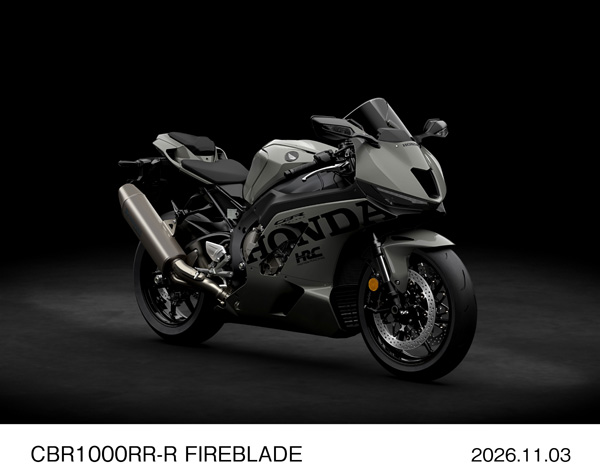
The standard model retains the essential performance technology of the redesigned Fireblade.
It uses Showa Big Piston Fork front suspension and a Showa BFRC-lite rear shock absorber.
Honda has revised the suspension damping characteristics to improve road holding and rider feedback.
The standard Fireblade is therefore not simply a lower-cost model wearing the same bodywork.
It receives the new frame, engine refinements and core chassis changes that define the 2027 generation.
For riders who enjoy a powerful sports motorcycle without requiring every available premium component, it could be the most sensible model in the range.
Fireblade SP: A more sophisticated package
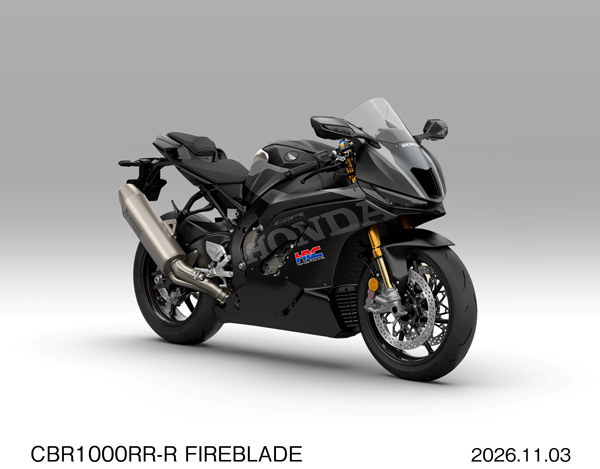
The Fireblade SP moves further into premium superbike territory.
Its most significant difference is the electronically controlled Öhlins suspension, with a Smart-EC system at both ends.
Electronic suspension allows damping behaviour to be adjusted according to the selected settings and riding conditions.
That provides the opportunity to combine a more compliant response during ordinary road riding with firmer settings for demanding track use.
Another distinctive feature is its hand-finished titanium fuel tank.
Titanium fuel tanks have appeared on previous Honda superbikes, but the latest manufacturing processes allow Honda to dispense with the outer plastic cover used before.
On the SP, portions of the titanium surface remain visible beneath the special finish.
Honda has also replaced certain aluminium engine components, including the cylinder-head cover, with magnesium.
These changes save more than 200 g on the SP.
None of that will transform a motorcycle on its own, but weight reduction and precise suspension control are particularly important in this category.
HRC Works Edition: The racing connection
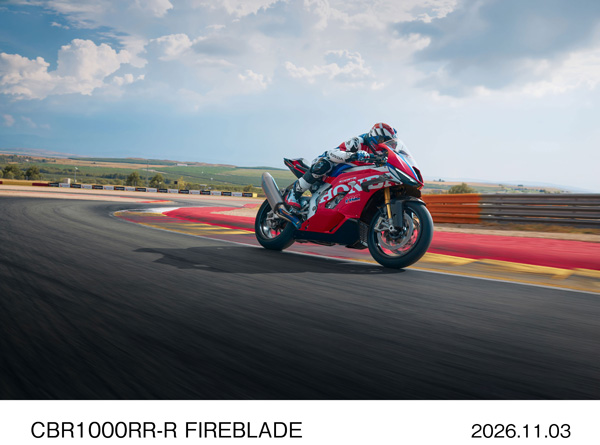
The most intriguing newcomer is undoubtedly the Fireblade HRC Works Edition.
This is a homologation model developed to support Honda's participation in the FIM World Superbike Championship.
Homologation is an important part of production-based racing. Manufacturers must meet the relevant regulations governing the motorcycles from which their race machines are derived.
The Works Edition is therefore more than an SP with different paintwork and an HRC badge.
It incorporates dedicated aerodynamic components made from carbon-fibre reinforced plastic.
These include the front winglets, front mudguard and rear duct bodywork.
The aerodynamic changes are intended to improve stability and cornering performance while reducing component weight.
The suspension specification also differs from the SP.
Rather than relying on electronically controlled suspension, the Works Edition uses mechanically adjustable Öhlins NPX front forks and a TTX36 rear shock.
That is a deliberate racing-oriented specification.
Braking is handled by Brembo Hypure Sports components.
The motorcycle is designed exclusively for solo riding, further emphasising its circuit-focused purpose.
Honda says the Works Edition is intended to be road-legal where the applicable market requirements are met.
But it is important not to confuse a homologation motorcycle with a fully prepared racing machine.
An optional HRC Racing Kit
Honda will also offer a special HRC Racing Kit for the Works Edition.
It includes dedicated fuel-injection and ignition components, a bottom-neutral shift arrangement, and specialist chassis adjustment parts.
These components are intended to help prepare the motorcycle for racing requirements.
Honda explicitly states that fitting the HRC Racing Kit voids the manufacturer's warranty.
The kit should therefore not be regarded as an ordinary accessory package for road use.
It is equipment intended for specialist competition applications.
Can Honda challenge the European superbikes?
The 2027 Fireblade arrives in a fiercely competitive part of the motorcycle market.
Ducati's Panigale V4 has become one of the reference points for high-performance superbike engineering.
BMW's S 1000 RR and M 1000 RR offer extraordinary performance and sophisticated electronic assistance.
Aprilia's RSV4 has established a formidable reputation for its chassis and V4 engine.
Kawasaki also remains an important presence, particularly through its Ninja ZX-10R and ZX-10RR family.
Against that competition, Honda cannot rely on the Fireblade name alone.
Engine performance matters, but so do cornering stability, rider confidence, braking consistency and how effectively the electronics allow the rider to use the available performance.
That is why the new chassis and revised engine response may prove more significant than simply achieving a higher maximum power figure.
The HRC Works Edition also gives Honda a clearer connection between its production superbike and its racing programme.
Whether those developments translate into improved World Superbike results and a better road-going motorcycle remains to be seen.
Confirmed for South Africa in 2027
There is already some encouraging local news.
Honda South Africa has confirmed that the new Fireblade is scheduled to arrive in 2027.
That is more than can be said for many of the motorcycles unveiled at EICMA 2026.
However, Honda has not yet confirmed which versions of the three-model range will be offered in South Africa.
Local prices, exact arrival dates and market-specific specifications also remain outstanding.
In particular, there is no confirmation that the exclusive HRC Works Edition will be allocated to South African dealers.
Until those details are announced, it would be premature to judge the Fireblade's value against its European and Japanese rivals.
The motorcycle also deserves proper independent testing before conclusions are drawn about its handling or engine character.
More than a famous name
The original Fireblade helped change expectations of what a superbike should be.
Its emphasis on handling, control and usable performance made it something special.
More than three decades later, Honda is returning to those fundamental principles with considerably more sophisticated engineering.
The new frame is designed to provide better feel and control.
The engine changes aim to make its power delivery more useful across a wider operating range.
And the HRC Works Edition demonstrates how seriously Honda is taking its renewed racing ambitions.
Of course, announcing a promising motorcycle and delivering a great motorcycle are two different things.
We will only know how far Honda has advanced the Fireblade when the new generation is independently tested.
But with 75% of its components redesigned and a proper racing-focused flagship at the top of the range, there is good reason to be interested.
The Fireblade legend has not been allowed to stand still.
And in 2027, South African riders will get to see the next chapter.
SHARE THIS ARTICLE
Enjoyed the ride? Share the story.