2027 KTM 1390 Super Duke GT EVO: The Beast Learns a New Trick
A 1 350 cc V-twin, serious sports-bike performance and enough equipment for long-distance touring. KTM's latest Super Duke GT EVO adds an Automated Manual Transmission to the mixture. But can automatic shifting really improve a motorcycle built around the enjoyment of riding?
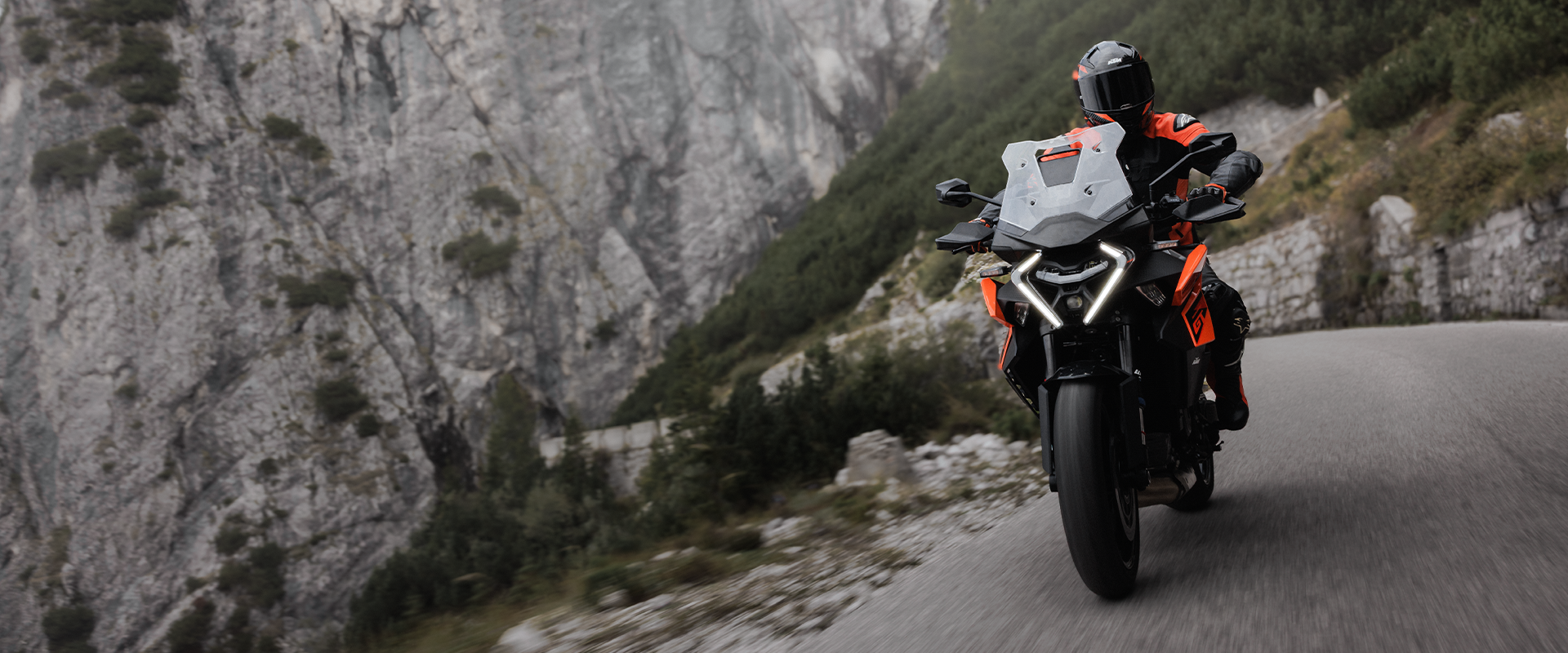
There are motorcycles designed to cover long distances in comfort, and there are motorcycles designed to make your heart beat a little faster every time the road starts twisting.
KTM has never been particularly interested in treating those two ideas as mutually exclusive.
Its Super Duke GT family has always taken an unconventional approach to sport touring. Rather than starting with a comfortable touring motorcycle and adding more power, KTM has effectively taken its formidable Super Duke performance platform and made it suitable for travelling.
The result has traditionally been something of a long-distance hooligan.
Now there is a new development.
The 2027 KTM 1390 Super Duke GT EVO introduces KTM's Automated Manual Transmission, allowing the rider to select gears manually or leave the job to the motorcycle.
It sounds like an unusual addition to a machine with such strong sporting ambitions.
But it also raises an interesting question about the future of performance motorcycles.
Is operating a clutch lever really an essential part of enjoying a ride?
Not quite a new motorcycle
KTM originally unveiled the redesigned 1390 Super Duke GT at EICMA 2024.
Its planned market introduction was subsequently delayed, and the motorcycle has taken longer than expected to reach production.
At EICMA 2026, KTM confirmed that the new GT would reach international dealerships in early 2027.
It also introduced the GT EVO, bringing the Automated Manual Transmission to the sport-touring range.
The distinction is straightforward: the standard GT retains conventional manual gear changing, while the EVO adds the choice of manual or automatic shifting.
Both share the same underlying performance and touring philosophy.
More than enough engine
At the heart of the new GT family is KTM's 1 350 cc LC8 V-twin engine.
It is closely related to the engine used in KTM's flagship Super Duke models.
The GT EVO has a six-speed transmission and a manufacturer-listed torque output of 145 Nm.
This is a motorcycle designed to deliver substantial acceleration, strong overtaking performance and effortless cruising at ordinary road speeds.
But it is not simply an engine with a windscreen bolted in front of it.
KTM has redesigned the chassis, revised weight distribution and developed the motorcycle around the demands of long-distance high-performance riding.
The company lists a weight of 213 kg without fuel.
That is not a ready-to-ride kerb weight, and should not be compared directly with motorcycles quoted fully fuelled.
The fuel tank holds approximately 19 litres, while seat height is 834 mm.
Those figures give a useful indication of the machine's intended size and proportions.
So how does KTM's AMT work?
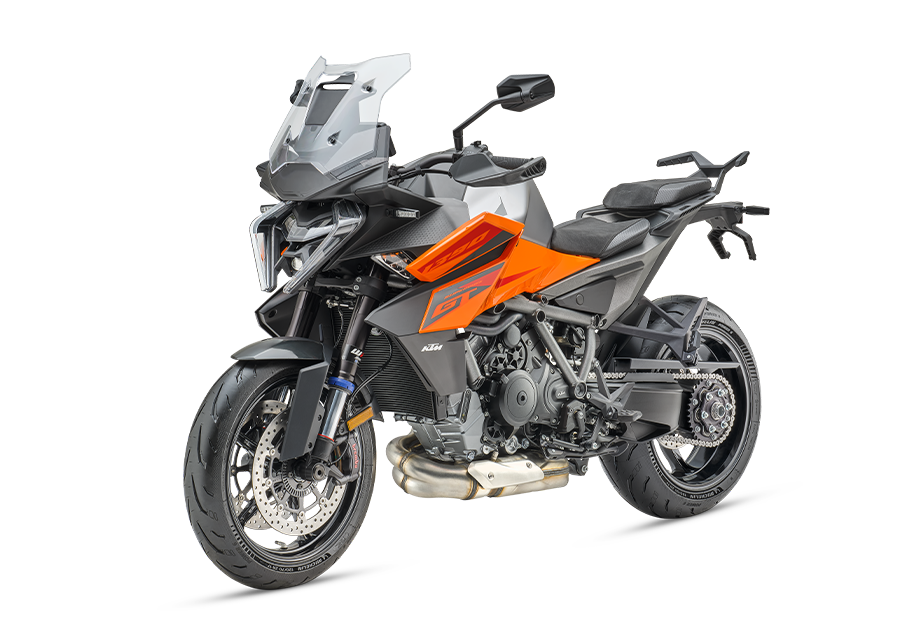
The most significant feature of the GT EVO is its Automated Manual Transmission, or AMT.
This isn't a conventional automatic gearbox of the kind found in a car.
It is a six-speed motorcycle transmission with an automated shifting mechanism and centrifugal clutch.
In automatic mode, the motorcycle selects and changes gears without the rider operating a clutch or gear lever.
In manual mode, the rider can choose gears using the foot selector or handlebar controls.
There is no conventional clutch lever to operate.
The centrifugal clutch engages as engine speed rises, allowing the motorcycle to pull away smoothly without manual clutch operation.
KTM says the system also prevents the rider from stalling the engine.
That could make an appreciable difference when negotiating slow traffic, parking areas or steep inclines.
The transmission has an unusual gear sequence: Park, Neutral and gears one through six.
Park incorporates a mechanical locking arrangement to prevent the motorcycle rolling when stationary.
KTM quotes gear changes taking approximately 50 milliseconds through its electronic shift actuator.
That is an impressive claimed response, but the important question will be how naturally the gearbox behaves during everyday riding.
Automatic when you want, manual when you don't
The most appealing aspect of the system is the choice it gives the rider.
Consider a long journey from Cape Town to the Garden Route.
There are highway sections where the ability to relax and leave the gear changing to the motorcycle could be rather welcome.
Then there are the mountain roads where choosing the right gear, controlling the engine and enjoying the corners are central to the experience.
KTM's system allows the rider to take direct control of gear selection whenever desired.
That is an important distinction from the idea that an automatic motorcycle must somehow be less engaging to ride.
Whether the system delivers the same level of involvement as a conventional manual gearbox will depend on its response, shift quality and behaviour when ridden hard.
Those are things only a proper road test can establish.
How is it different from Honda's E-Clutch?
Manufacturers are increasingly exploring ways of reducing the workload associated with conventional motorcycle transmissions.
Honda's E-Clutch is a good example, but it works differently from KTM's AMT.
With Honda E-Clutch, the rider continues to select gears using the conventional foot lever.
The system automates clutch operation, particularly when stopping, starting and changing gears.
It does not automatically choose which gear to use.
KTM's AMT goes further by allowing the motorcycle to handle both clutch operation and gear selection in automatic mode.
Honda's Dual Clutch Transmission, or DCT, is a closer comparison in terms of rider functionality.
However, DCT uses a different internal transmission design with two clutches.
Each approach has its own advantages and characteristics.
The important point is that motorcycle manufacturers are offering riders more choices about how much of the shifting process they want to control.
Still a serious sports motorcycle
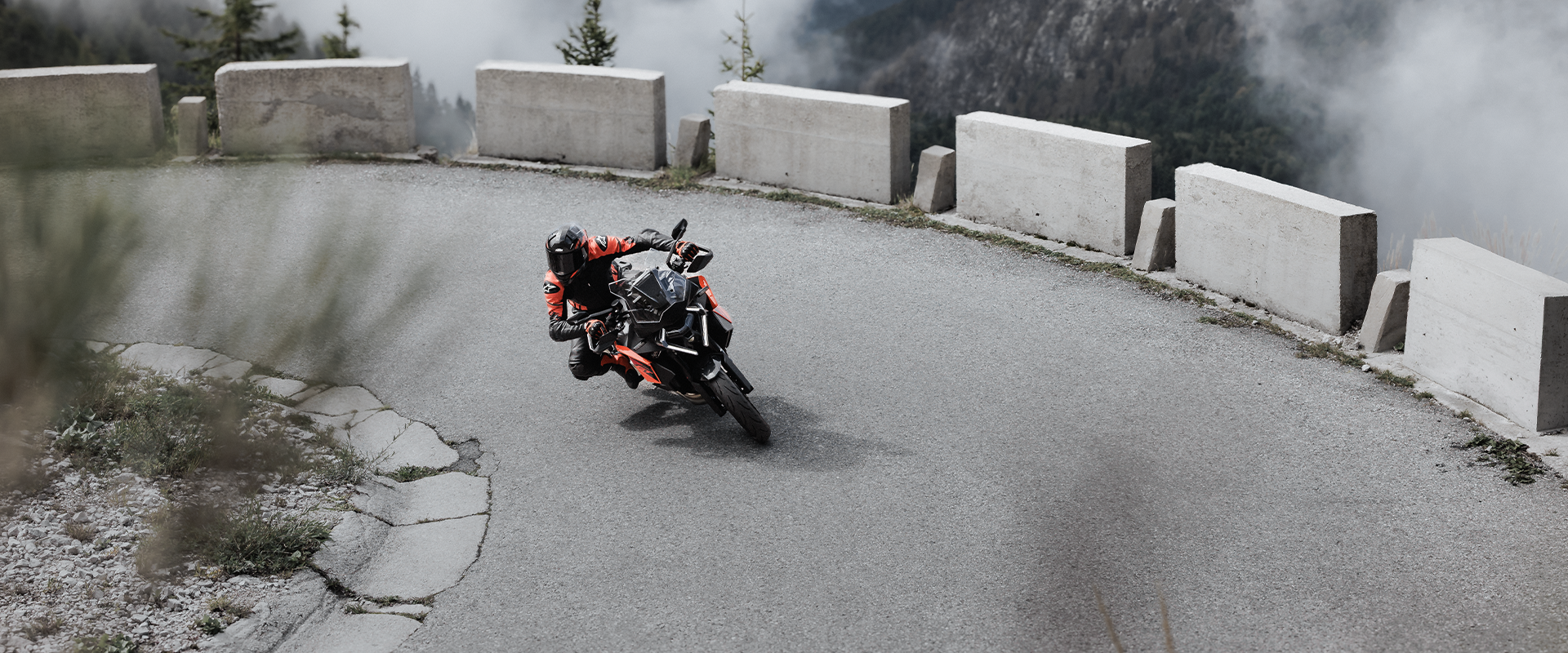
The automatic transmission may attract most of the headlines, but the GT EVO retains a serious chassis specification.
KTM has equipped the motorcycle with third-generation WP APEX semi-active suspension.
An electronically controlled 48 mm front fork works with a semi-active rear shock, allowing the suspension behaviour to be adjusted electronically.
Front suspension travel is 125 mm, while the rear provides 140 mm.
The system is designed to provide a useful balance between comfort and sporting control.
A braced single-sided swingarm contributes to the motorcycle's distinctive appearance.
Braking comes courtesy of Brembo Stylema four-piston front calipers gripping twin 320 mm discs.
A 240 mm disc and two-piston caliper are fitted at the rear.
Electronic rider assistance includes cornering ABS, traction control and selectable riding modes.
The standard modes include Rain, Street, Sport and a Custom setting.
Additional performance functions are available through optional equipment packages.
In other words, KTM hasn't softened the motorcycle into a conventional luxury tourer.
It remains performance-focused.
Touring technology catches up
KTM has also made substantial changes to the GT's equipment and rider interface.
The most obvious is an 8.8-inch touchscreen TFT display.
It incorporates onboard map navigation that can operate offline, removing the need to rely entirely on a connected smartphone for basic navigation.
Riders can also access route-planning and navigation preferences through the updated interface.
The motorcycle includes an integrated phone mounting arrangement, USB-C charging and a revised switchgear layout.
There is a manually adjustable windscreen and handlebars that can be positioned to suit the rider's preferred seating position.
KTM has also revised the rider and pillion seating to improve long-distance comfort.
These changes matter because the enjoyment of a motorcycle over a short mountain pass is only part of sport touring.
It must also remain comfortable several hundred kilometres later.
R419 999 in South Africa
For South African riders, there is already useful pricing information.
KTM South Africa lists the 2027 Super Duke GT at a base price of R399 999.
The new GT EVO is listed at R419 999.
That means the Automated Manual Transmission version carries an additional R20 000 over the standard GT.
Both prices are manufacturer-listed figures at the time of writing.
They do not confirm that motorcycles are already in South African dealer stock.
Local delivery dates and final dealer quotations should therefore be checked before making a purchase decision.
The price difference raises an interesting question for potential buyers.
Is the convenience of automatic shifting worth R20 000?
For someone who prefers a conventional manual gearbox, the standard GT may remain the more appealing choice.
But for a rider covering long distances, regularly travelling through traffic or simply appreciating the flexibility of an automated system, the EVO deserves serious consideration.
Where does it fit?
The large-capacity sport-touring category has a very different character from adventure touring.
Motorcycles such as the BMW R 1300 RS, Kawasaki Ninja 1100SX and Suzuki GSX-S1000GT approach the balance between performance and long-distance comfort in different ways.
The KTM sits at the more aggressive end of that spectrum.
It offers substantial V-twin performance, sophisticated suspension and touring equipment without abandoning the sporting character for which the Super Duke family is known.
Its relatively substantial price also places it firmly in the premium end of the South African motorcycle market.
The challenge will be convincing buyers that its combination of performance, technology and touring ability justifies the investment.
Who should consider the GT EVO?
The ideal GT EVO rider is probably someone who enjoys fast, flowing roads and substantial engine performance but also wants to travel comfortably over longer distances.
It is not intended to replace a gravel-road adventure motorcycle, nor is it a conventional full-dress tourer.
Its purpose is to cover distance quickly and comfortably while keeping the riding experience entertaining.
The automated transmission gives it a distinctive additional attraction.
But prospective buyers should experience the system before assuming it will suit their riding preferences.
Automatic shifting is not automatically better for everyone.
It is another way of enjoying a motorcycle, and the choice remains with the rider.
The interesting part is the choice
There was a time when an automatic transmission on a performance motorcycle would have seemed almost contradictory.
But technology is changing what riders can expect from their machines.
Honda has demonstrated the appeal of DCT and E-Clutch, while KTM is taking its own approach with AMT.
The important development is not that riders are being forced to abandon conventional gear changing.
It is that they have more ways to interact with their motorcycles.
KTM's 1390 Super Duke GT EVO is a particularly interesting demonstration of that principle.
It combines serious performance with the convenience of automatic shifting, while still allowing manual control when the rider wants it.
Whether that combination delivers the best of both worlds will only become clear through independent road testing.
But one thing is certain: the idea of an engaging motorcycle no longer has to include operating a clutch lever at every junction.
And perhaps that is the new trick worth paying attention to.
SHARE THIS ARTICLE
Enjoyed the ride? Share the story.