2028 KTM 450 RC: Small Capacity, Serious Intent
A twin-cylinder engine, adjustable WP suspension, a single-sided swingarm and advanced rider electronics. KTM's unexpected EICMA introduction suggests that smaller sports motorcycles are about to become even more interesting.
Not everybody wants a 200 hp superbike. In fact, there is a good argument that most riders would have considerably more fun on a smaller sports motorcycle that they can properly enjoy without constantly worrying about losing their licence.
The lightweight supersport class has been gathering momentum, with manufacturers recognising that a sharp chassis, manageable weight and an entertaining engine can be more rewarding than outright horsepower.
KTM clearly sees an opportunity.
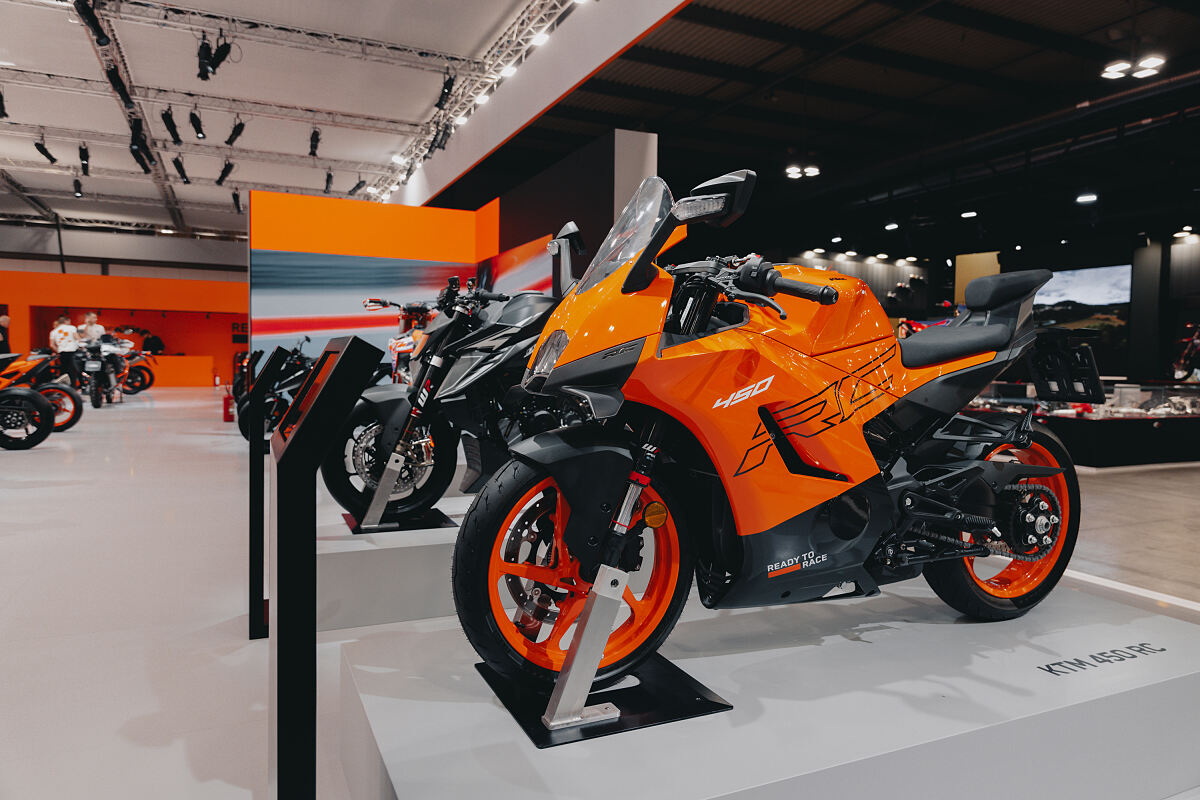
At EICMA 2026 in Milan, the Austrian manufacturer surprised visitors with the 450 RC, an entirely new twin-cylinder sports motorcycle scheduled to enter production towards the end of 2027.
The new motorcycle will be designated a 2028 model, and although KTM has not yet released the complete technical specification, what has been revealed suggests a serious approach to the category.
This is not merely a smaller engine wrapped in aggressive bodywork. KTM is promising a motorcycle developed around its own chassis setup, suspension calibration and riding characteristics.
A new direction for KTM's smaller sports bikes
KTM has built a reputation for making entertaining smaller-capacity motorcycles.
The RC 390 demonstrated how much enjoyment could be extracted from a lightweight sports bike, while the larger 990 RC R has taken the manufacturer's supersport ambitions into considerably more powerful territory.
The new 450 RC sits between those ideas.
Its styling is closely related to the larger RC family, with a sharply pointed fairing, compact proportions and unmistakable KTM orange paintwork.
But the major change is the move to a twin-cylinder engine.
The RC 390 uses a single-cylinder engine, an arrangement that offers advantages in simplicity and compactness.
A parallel twin can provide a different character, potentially offering smoother power delivery and greater flexibility across the rev range.
Exactly how the KTM 450 RC will deliver its performance remains to be seen.
KTM has not included final engine displacement, power or torque figures in its official EICMA announcement.
Figures circulating elsewhere should therefore not be treated as confirmed specifications for the forthcoming global motorcycle.
More than just a different badge
The 450 RC also raises an interesting question about KTM's relationship with CFMOTO.
The two manufacturers have an established industrial partnership, and international reports have linked the 450 RC with the platform used by CFMOTO's 450SR-S.
There are similarities, including the twin-cylinder configuration and single-sided swingarm.
However, KTM is emphasising that the new 450 RC has been developed with its own chassis setup, calibration and specifications.
That distinction matters. Two motorcycles can share underlying engineering without offering the same riding experience.
Engine response, suspension settings, steering geometry and electronic calibration all influence how a motorcycle behaves.
We will only know how different the KTM feels once independent road and track tests become available.
WP suspension with proper adjustment
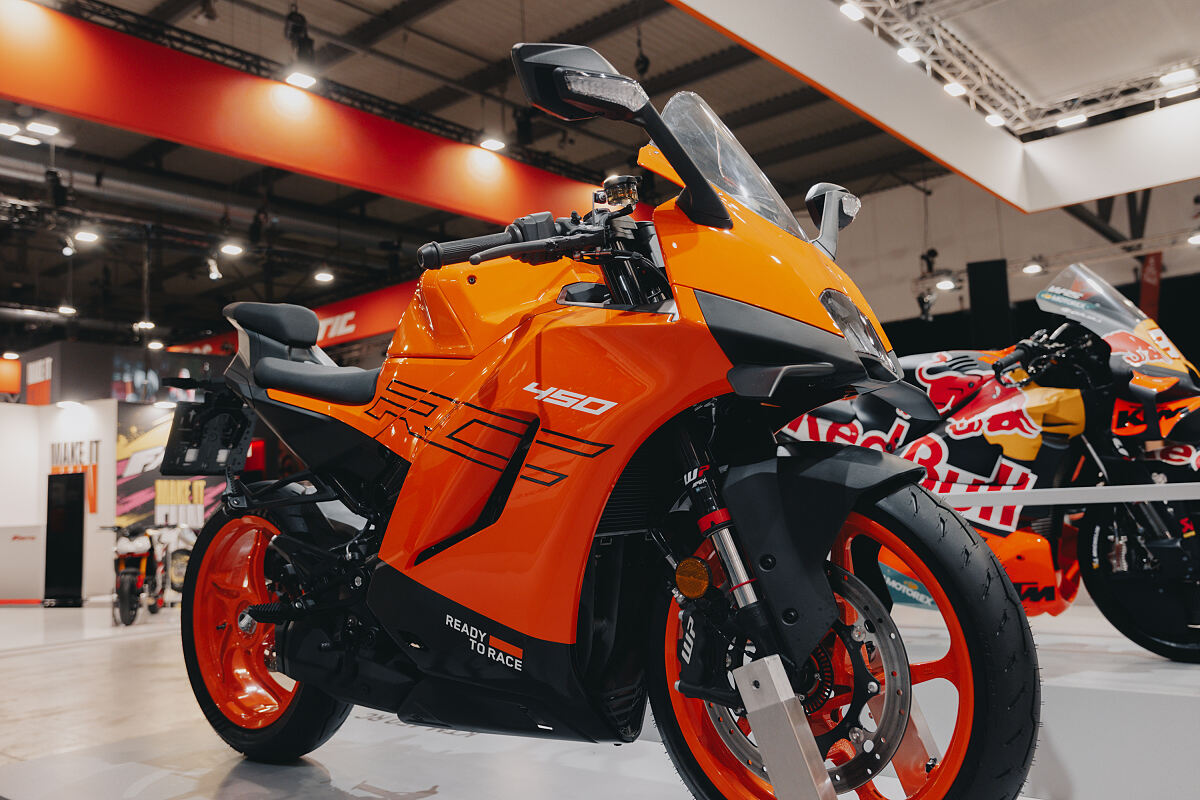
Suspension is one of the more encouraging aspects of the new motorcycle.
Up front is a 43 mm WP APEX upside-down fork, adjustable for compression and rebound damping.
At the rear, a WP APEX shock provides adjustment for spring preload and rebound damping.
That is useful equipment in this category, particularly for riders who want to experiment with suspension settings or occasionally take their motorcycles to a circuit.
Adjustable suspension allows a rider to tailor aspects of the motorcycle's behaviour to different conditions and preferences.
Of course, the presence of adjustment does not automatically guarantee excellent handling.
The basic suspension calibration must still be right, and that is something only a proper ride will establish.
That single-sided swingarm
One of the most striking features of the 450 RC is its single-sided rear swingarm.
It gives the motorcycle an appearance normally associated with more expensive sports machinery, leaving one side of the rear wheel prominently exposed.
It is a distinctive piece of design, although appearance should never be confused with performance.
A single-sided arrangement can simplify certain maintenance operations, but its weight, stiffness and cost depend on the actual engineering.
KTM has not yet published enough information to draw conclusions about those details on the 450 RC.
What is clear is that KTM intends the motorcycle to look and feel like a serious member of its sports range.
A serious braking package
Braking duties are handled by a single 320 mm front disc with a radially mounted four-piston WP caliper.
KTM says the single-disc arrangement helps reduce unsprung weight, which can benefit suspension response and steering behaviour.
It is an interesting choice for a motorcycle with clear sporting ambitions.
Rather than fitting twin front discs simply for appearance, KTM appears to be concentrating on a balance between braking performance and component weight.
Whether the arrangement offers sufficient braking consistency under repeated hard track use will be something worth examining when the bike becomes available.
Pirelli Diablo Rosso IV tyres will be fitted as standard, another indication that KTM is approaching the 450 RC as a proper sports motorcycle.
Big-bike electronics on a smaller machine
Smaller sports motorcycles once came with relatively basic electronics, leaving the sophisticated technology to larger and more expensive models.
That is changing quickly.
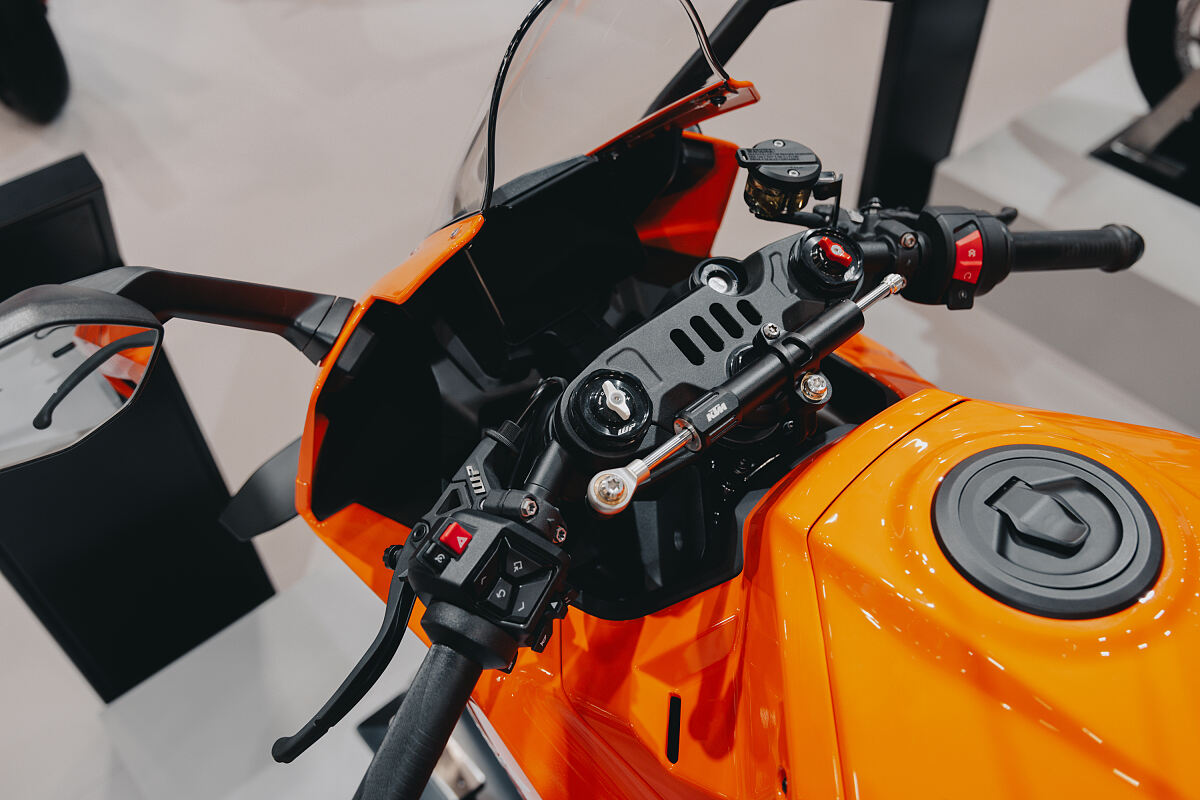
KTM has confirmed that the 450 RC will feature cornering ABS, Motorcycle Traction Control and multiple riding modes.
The dual-channel ABS system includes Road and Supermoto modes, allowing different responses according to the selected riding setup.
These features are intended to provide additional control without preventing riders from enjoying the motorcycle's performance.
A five-inch TFT display provides access to the relevant settings.
KTM has also confirmed both USB-A and USB-C charging ports.
That might sound like a small detail on a sports motorcycle, but everyday convenience matters to riders who use their bikes for more than weekend entertainment.
The final list of standard equipment, optional functions and market-specific features has not yet been announced.
Where will it compete?
The KTM 450 RC enters a particularly interesting part of the motorcycle market.
The Kawasaki Ninja 500 offers a 451 cc parallel twin in a relatively accessible sports motorcycle package.
CFMOTO's 450SR-S uses a 449.5 cc parallel twin and also features a single-sided swingarm.
The Aprilia RS 457 is another direct rival in the lightweight twin-cylinder sports category.
Yamaha's smaller R-series models offer another established alternative for riders who want sporting performance without moving into litre-class territory.
Those motorcycles approach the balance between comfort, performance and price in different ways.
KTM seems to be placing considerable emphasis on suspension specification, electronic assistance and a more aggressive riding character.
But it would be premature to declare it a class leader before we know its full specifications, weight and price.
What about South African buyers?
There is already a local market for smaller twin-cylinder sports motorcycles.
At the time of writing, Kawasaki South Africa lists the 2026 Ninja 500 at R124 995.
CFMOTO South Africa lists the 450SR-S at R125 900.
Those figures give us an idea of the price territory occupied by some of the KTM's potential competitors.
They are not, however, an indication of what the KTM itself will cost.
KTM has not released a South African price, confirmed local specifications or announced an arrival date for the 450 RC.
Nor has the company confirmed whether every market will receive the same equipment.
Until those details become available, there is little value in speculating about whether the motorcycle will be cheaper or more expensive than its rivals.
Its success in South Africa would depend on more than the purchase price alone.
Parts availability, servicing costs, reliability and dealer support will matter to buyers intending to use the motorcycle regularly.
Who should be interested?
The 450 RC will likely appeal to riders who enjoy the feel and handling of a sports motorcycle but don't need the extreme performance of a modern superbike.
It could also be appealing as a motorcycle for occasional track days, particularly if its adjustable suspension proves as capable as the specification suggests.
For a newer rider, the appeal will depend on more than engine size.
Riding position, seat height, throttle response and weight will all influence how approachable the motorcycle feels.
Those are details we cannot properly judge until the production motorcycle is available for assessment.
An aggressive riding position may be entertaining on a circuit, but less appealing for someone commuting through traffic every day.
Equally, a motorcycle that offers excellent handling on a winding road can be far more satisfying than one whose performance can rarely be used.
A promising return to sensible performance
What makes the 450 RC particularly interesting is the direction it represents.
Motorcycle manufacturers have spent years increasing the power and sophistication of their flagship sports models.
Meanwhile, smaller-capacity sports bikes have become increasingly capable in their own right.
Modern tyres, suspension and electronic rider assistance allow manufacturers to build motorcycles that offer genuine sporting enjoyment without the intimidating performance of a litre-class superbike.
The KTM 450 RC looks like another step in that direction.
It has distinctive styling, a promising chassis specification and a twin-cylinder engine that could give it a different character from KTM's familiar single-cylinder sports machines.
But the important unanswered questions remain: how much power will it produce, what will it weigh, how will it ride and what will it cost?
Production is planned for late 2027, with the 450 RC arriving as a 2028 model.
That means there is still some time before potential buyers can make a proper assessment.
For now, KTM has given the lightweight supersport class another motorcycle worth watching.
And in a category where riding enjoyment matters more than bragging rights, that is welcome news.
SHARE THIS ARTICLE
Enjoyed the ride? Share the story.